


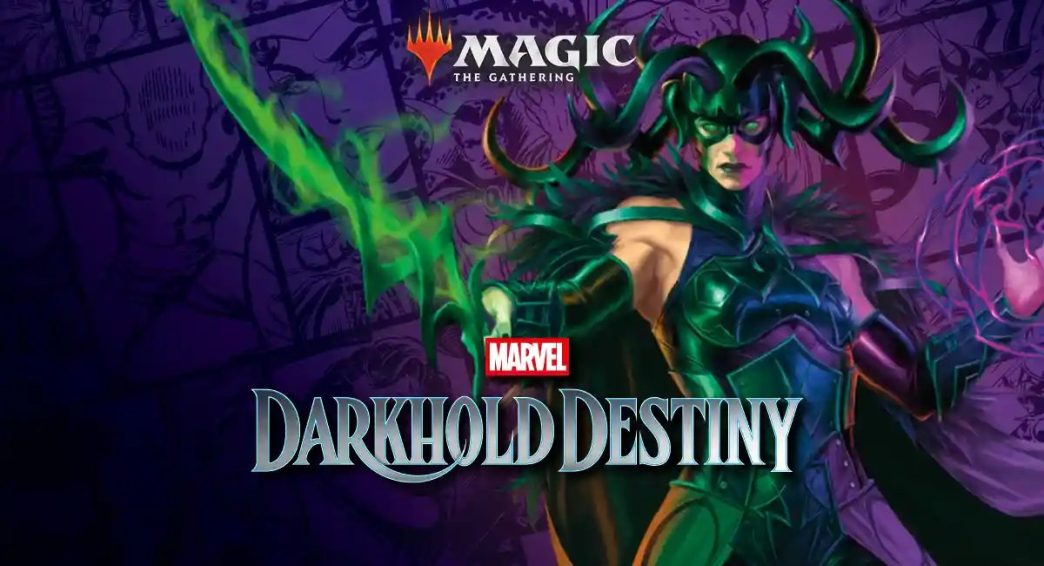

After Spider-Man swung into Magic: The Gathering and Marvel’s wider superhero universe followed, Wizards of the Coast knew its next collaboration needed to go somewhere different.
At New York Comic Con 2026, that meant heading straight into the darkness.
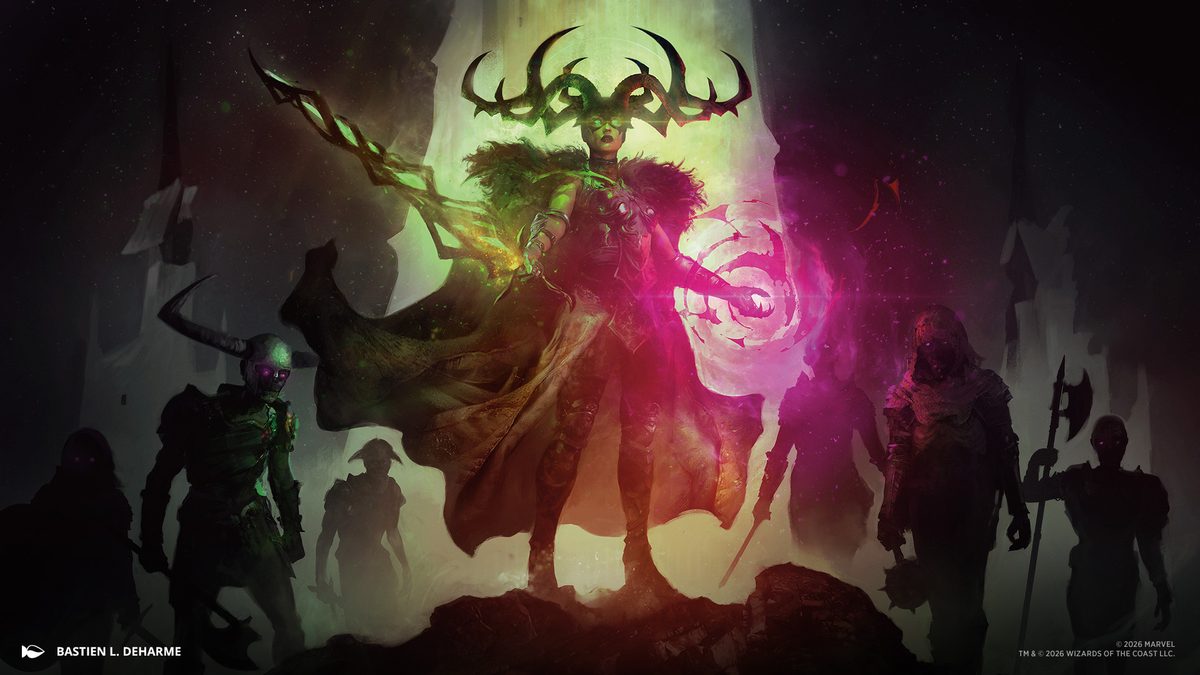
Magic: The Gathering | Marvel: Darkhold Destiny turns its attention toward the mystical, mythological and monstrous corners of Marvel, bringing characters including Doctor Strange, Thor, Hela, Dormammu, Blade, Moon Knight, Ghost Rider, Magik and Scarlet Witch into a set built around something Magic understands particularly well: actual magic.
But Darkhold Destiny is doing more than translating Marvel characters into cards. It is the first Universes Beyond set built around an original story created in collaboration with Marvel, giving Wizards the opportunity to bring characters together who do not normally share the same narrative while reimagining their worlds through Magic’s visual and mechanical language.
During NYCC, Mark Rosewater, head designer for Magic: The Gathering, joined members of the design and creative team to walk us through the set, its story, redesigned Marvel characters, new mechanics and the philosophy behind making what Rosewater called the most “magicky” Marvel set possible.
Marvel’s Darker Characters Finally Step Into Magic’s Territory
Rosewater described Darkhold Destiny as Magic’s third major Marvel set, following Spider-Man and Marvel Super Heroes. Those first releases focused heavily on Marvel’s most recognizable heroes, including characters audiences have spent years seeing across movies, television and comics.
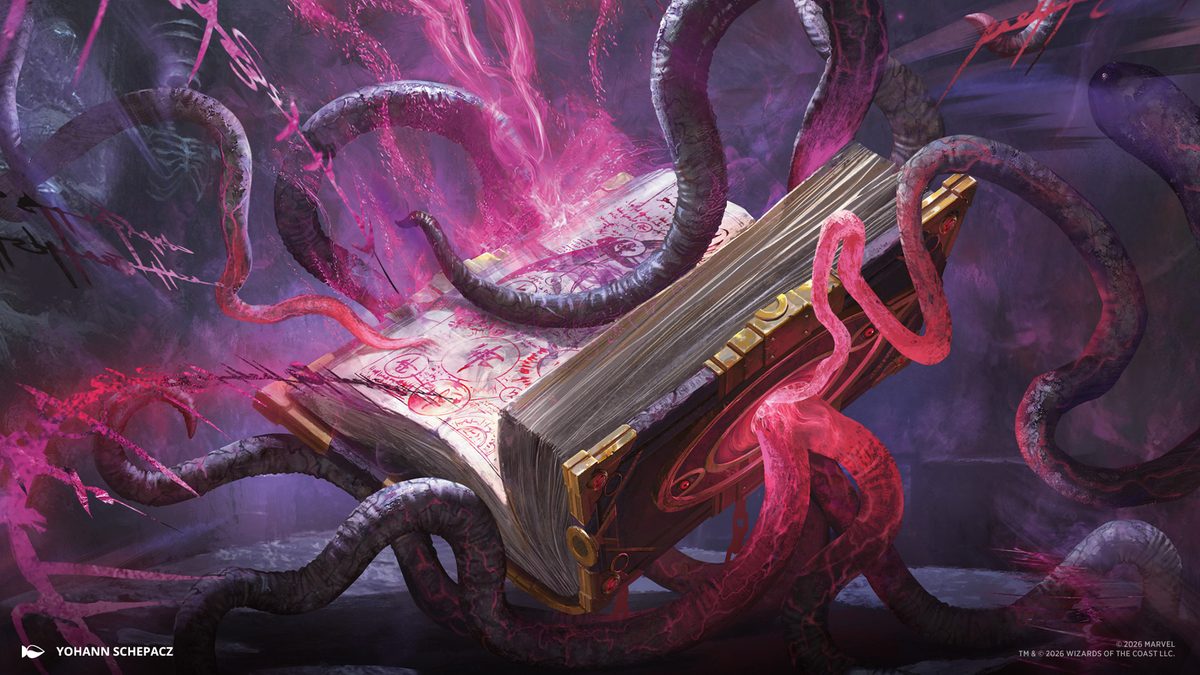
Darkhold Destiny deliberately moves away from that center.
Marvel has another side populated by sorcerers, gods, demons, supernatural beings and places where the rules of reality become considerably less stable. Those characters may not always receive the same mainstream attention, but they fit naturally inside a game that has spent more than 30 years building worlds around spells, creatures, graveyards, dimensions and magical conflict.
“We wanted to set out to make a set that was kind of the most magicky Marvel set that we can make.”
— Mark Rosewater
That approach immediately gives Darkhold Destiny its own identity. This is not simply another superhero set where familiar abilities are translated into game mechanics. Wizards can pull directly from Marvel concepts that already sound like Magic cards before anyone redesigns them.
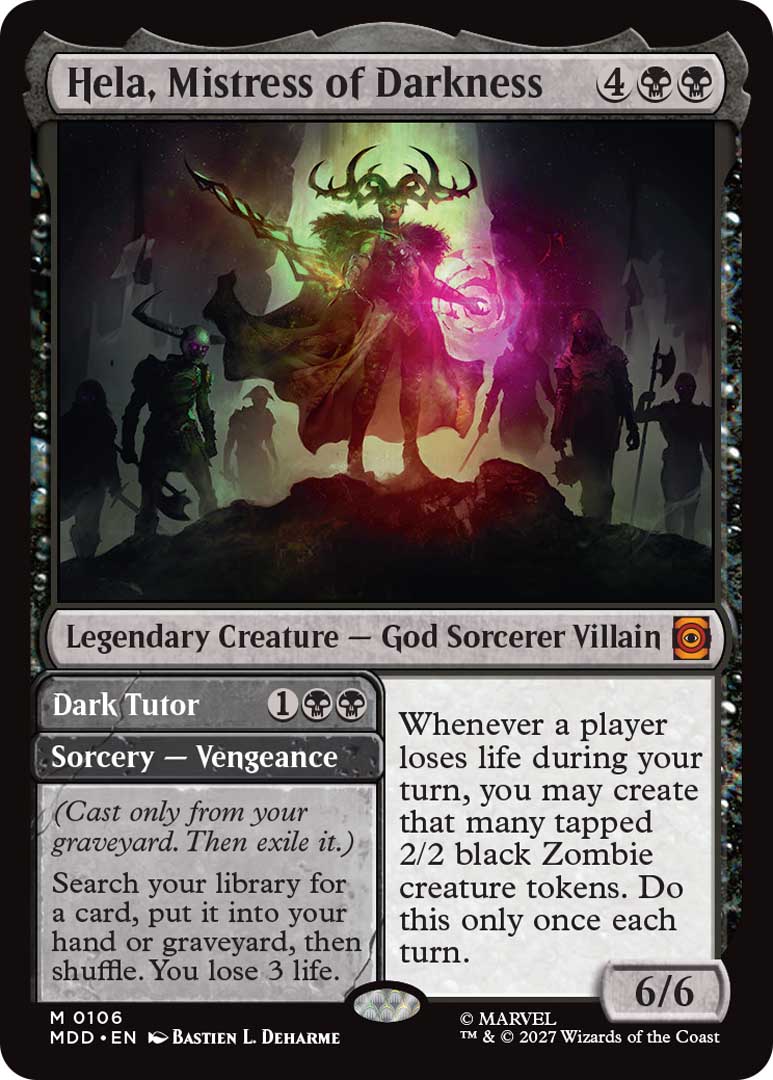
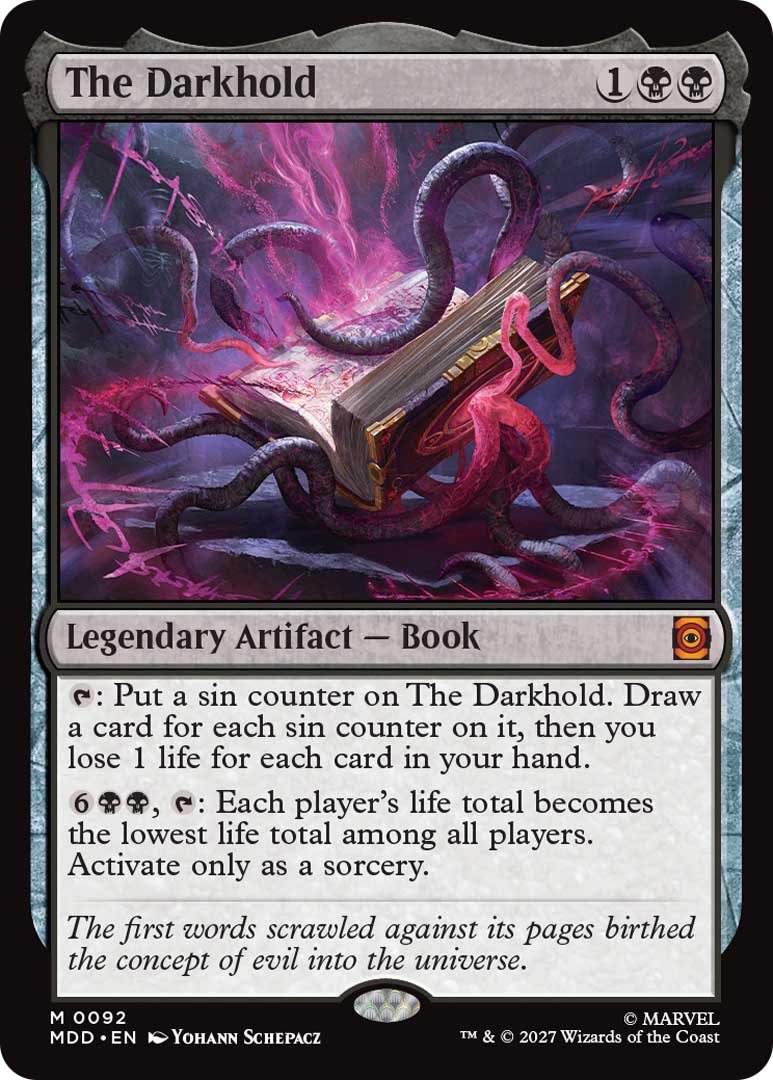
The Darkhold is an evil spellbook. Doctor Strange is a sorcerer. Hela is a goddess of death. Ghost Rider commands the Penance Stare. Magik literally grew up in Limbo.
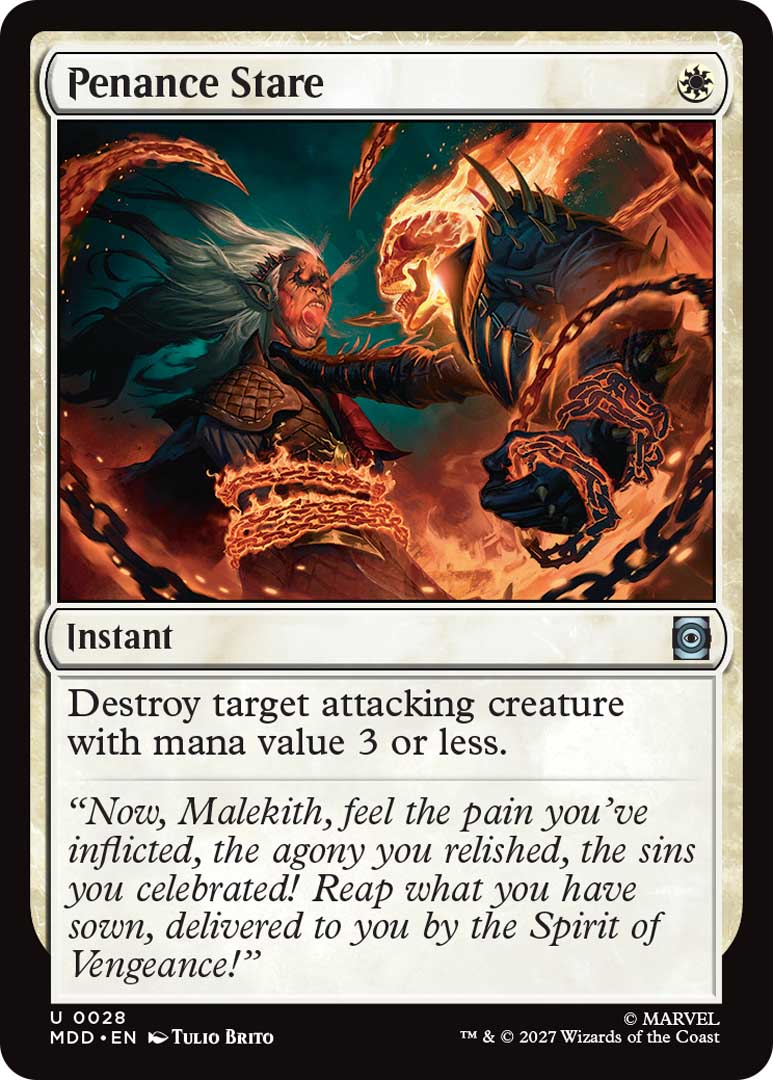
Rosewater joked that names like Penance Stare already sound like cards Magic might have invented on its own.
The overlap is almost too convenient.
Darkhold Destiny Begins With the Villains
The original story also reverses the structure of the previous Marvel sets by beginning with the villains.
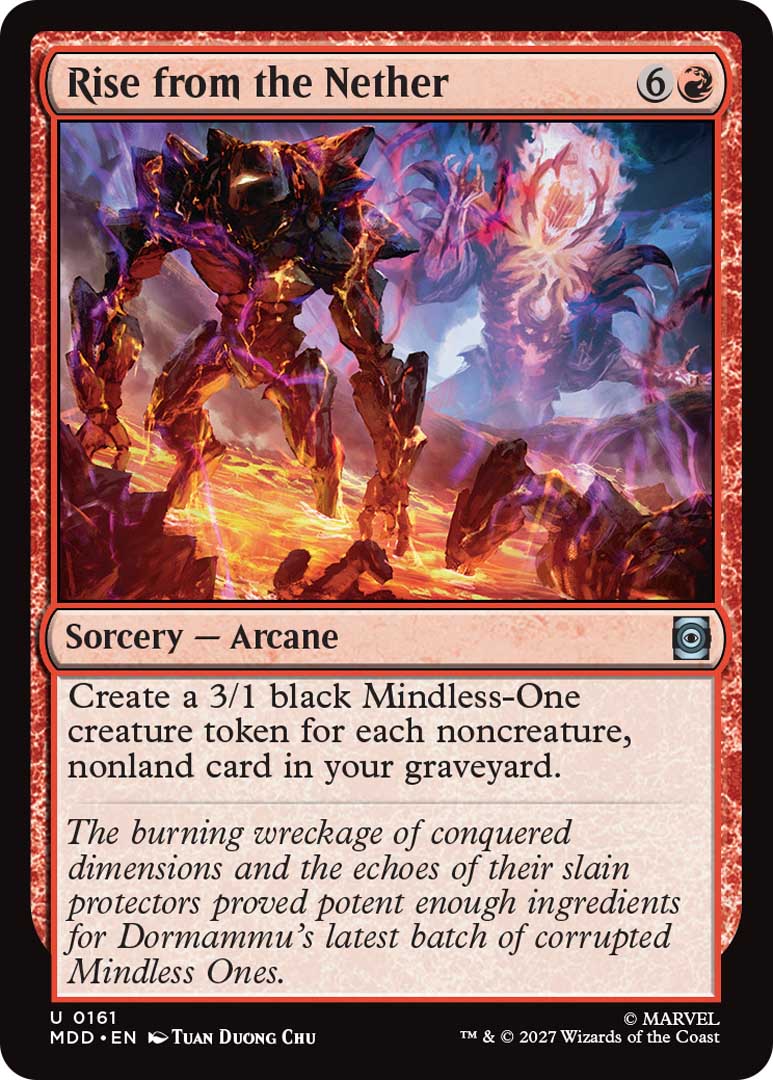
Dormammu and Hela obtain a page from the Darkhold containing an incantation powerful enough to shatter the boundaries separating dimensions across the Marvel Universe. The pair unite their forces and unleash armies of zombies, Mindless Ones and other creatures into a multidimensional invasion.
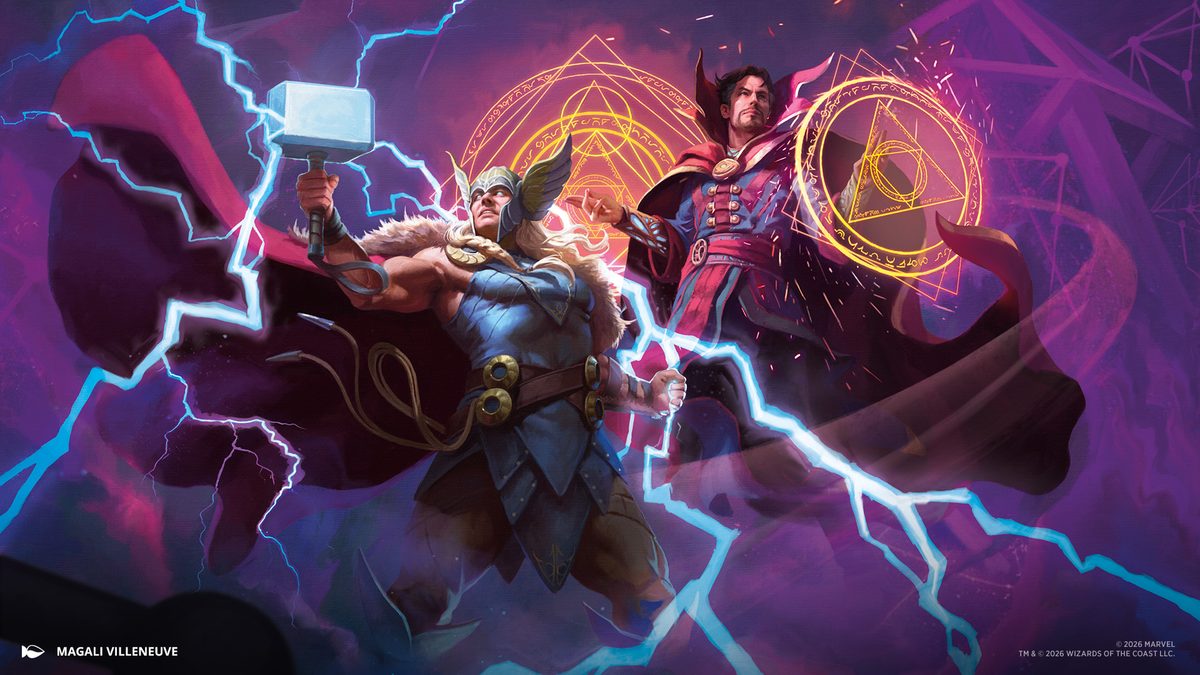
That leaves Thor and Doctor Strange trying to stop them, although neither hero is initially particularly interested in becoming the other’s partner. Their competing approaches become part of the story, forcing them to learn how to work together before they can begin assembling allies from across Marvel’s realms and dimensions.
Some of those alliances will involve familiar heroes. Others may require former enemies.
That freedom is one of the advantages of creating an original narrative rather than adapting an existing comic storyline. Wizards can place characters together based on how well they serve the story and gameplay, creating rivalries and combinations that have rarely, if ever, happened elsewhere.
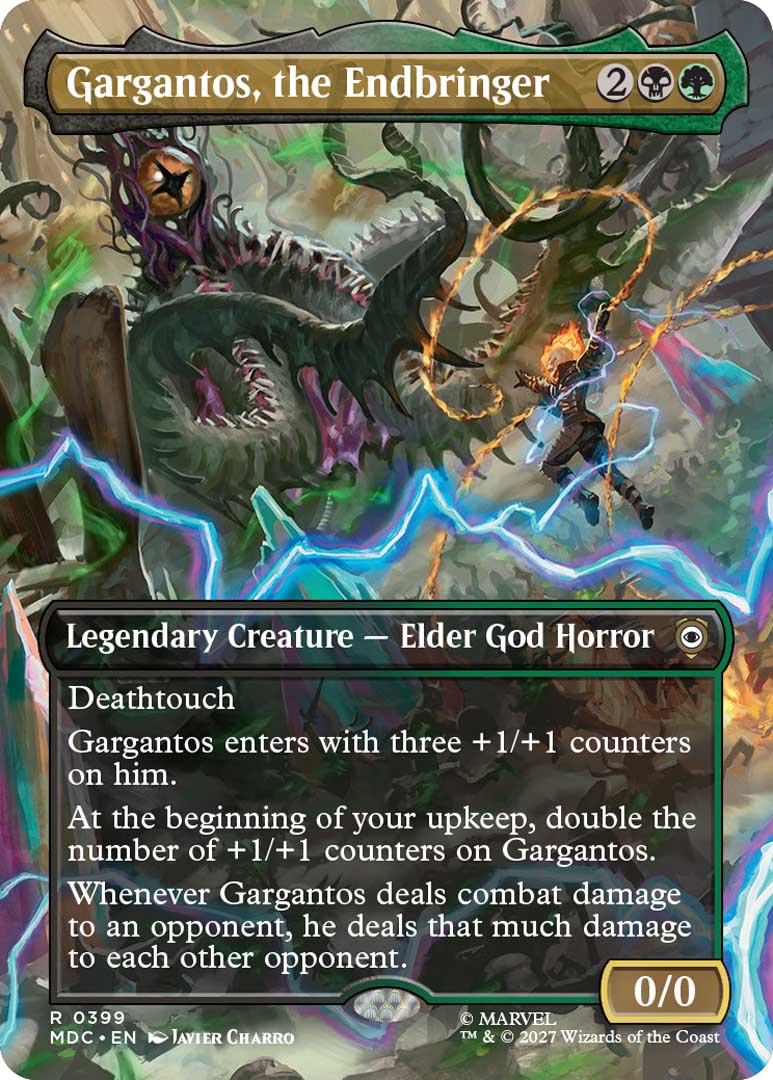
Ghost Rider taking on Malekith was one example shared during the presentation. It is not an obvious Marvel matchup, which is precisely why the design team found it exciting.
The story will move across nearly 30 dimensions, giving Darkhold Destiny an unusually wide canvas even by Marvel standards.
Marvel Let Magic Redesign Its Characters
The collaboration becomes even more interesting visually.
Rather than simply reproducing familiar Marvel costumes on Magic cards, the creative team was given permission to reinterpret major characters as if they were developing figures for one of Magic’s own sets.
Meredith Mulroney, art director on the Universes Beyond team and lead art director for Darkhold Destiny, described treating Marvel’s characters almost like Magic Planeswalkers. The goal was to preserve the visual elements that make someone immediately recognizable while pushing their designs deeper into fantasy.
Dormammu offered an obvious starting point. His flaming head is already iconic, but the team asked what would happen if his entire physical form became an extension of that magical energy. Hela retained her instantly recognizable silhouette while incorporating influences that could make her feel at home alongside Magic’s Norse-inspired fantasy worlds.
“We wanted to make sure that magical flavor that you can apply to art, when you have the infinite effects budget of a single painting, was there.”
— Meredith Mulroney
Different forms of magic also received distinct visual languages. Divine beings could carry one style, trained sorcerers another, while anyone drawing power from the Darkhold would visibly reflect dark magic.
Scarlet Witch became an especially important example. Her design incorporates jewelry and chained elements suggesting tradition and restraint, while her chaos form abandons those visual restrictions entirely.
The goal was transformation without losing identity. Players should be able to look at the artwork and immediately recognize Doctor Strange, Hela, Blade or Scarlet Witch, while also feeling that these versions belong inside Magic.
Magik Shows How Far the Set Can Reach
The inclusion of Magik demonstrates how broad the creative team was willing to go.
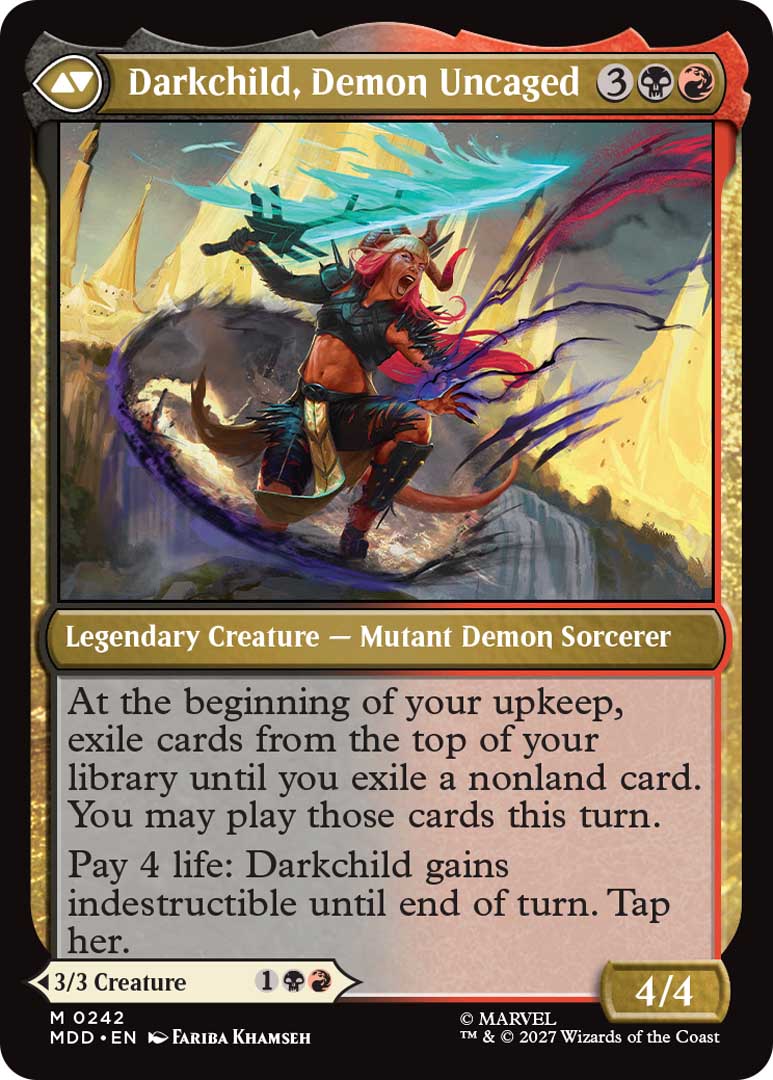
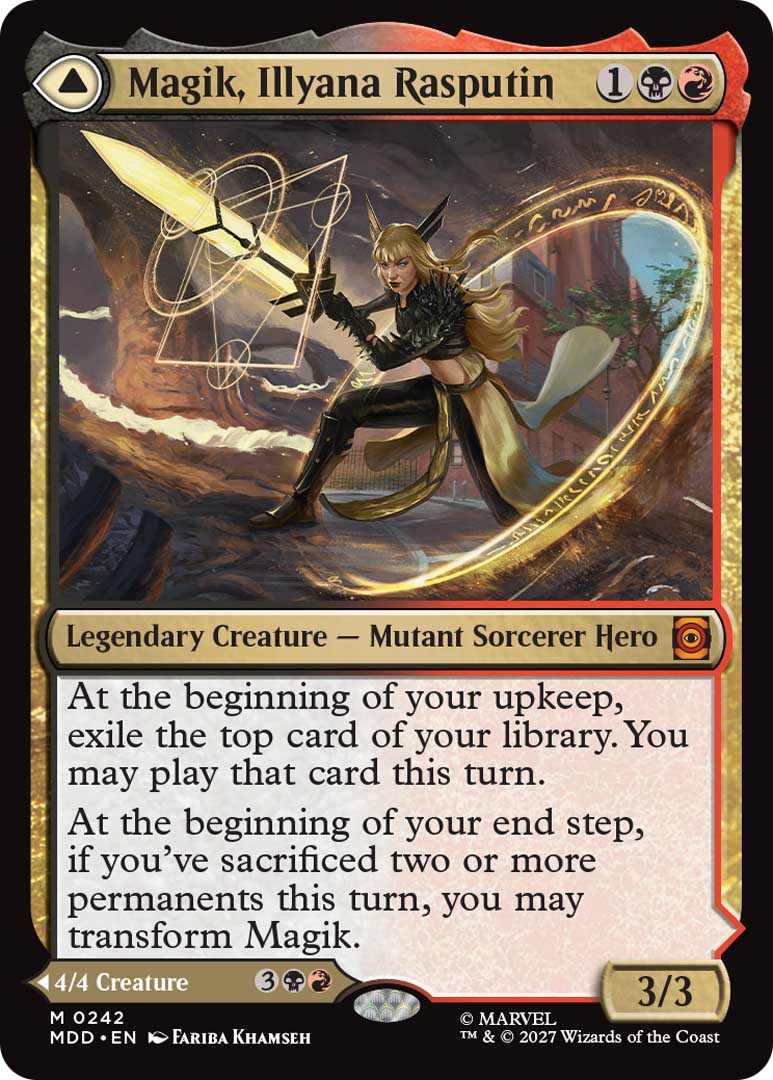
She may be closely associated with the X-Men, but her history as a sorceress raised in Limbo made her a natural fit for Darkhold Destiny. Her double-faced card presents Magik on one side and allows her to transform into Darkchild on the other.
The design retains pieces of her X-Men identity without allowing them to overpower the darker fantasy aesthetic of the set. Her armor was redesigned to feel forged in Limbo, while Darkchild becomes physically larger and more imposing.
That philosophy extends across the collection. A character does not have to originate in Marvel’s supernatural corner to qualify. If their mythology, powers or story make sense within Darkhold Destiny, they can become part of the world.
It opens the door to material from X-Men, Doctor Strange, Thor, Ghost Rider, Captain Britain and many other corners of Marvel without making the set feel like another general-purpose superhero collection.
The Darkhold Turns Power Into a Dangerous Resource
Of course, Magic still has to work as a card game.
The Darkhold itself becomes one of the centerpiece cards and reflects the temptation associated with the object in Marvel lore. Players can trade life for power by drawing additional cards, then potentially use another ability later to drag everyone else down to their diminished life total.
That relationship between enormous power and consequences fits the object perfectly.
Double-faced cards also return as a way of representing Marvel transformations. Rosewater pointed to previous designs such as Peter Parker transforming into Spider-Man, but Darkhold Destiny allows the mechanic to explore considerably darker transformations.
The set also introduces Vengeance, a new mechanic represented visually by a tombstone symbol. A creature with Vengeance can generate another effect after reaching the graveyard through death, discard or milling.
Hela naturally demonstrates that mechanic.
Even when she is gone, she can still reach back from the grave.
The design space also creates room for characters whose entire identities revolve around vengeance, including one particularly obvious Spirit of Vengeance.
Ghost Rider Was Almost Made for a Magic Card
Ghost Rider’s Penance Stare became one of the clearest examples of the collaboration working almost effortlessly.
Marvel already has decades of spells, magical abilities and supernatural concepts with names that fit comfortably beside traditional Magic cards. Darkhold Destiny gives Wizards permission to use those concepts directly instead of treating every superpower as an approximation of magic.
That distinction becomes important throughout the set.
Rosewater explained that previous Marvel releases often featured abilities representing superhero powers. Darkhold Destiny contains far more literal spells and spellcasters.
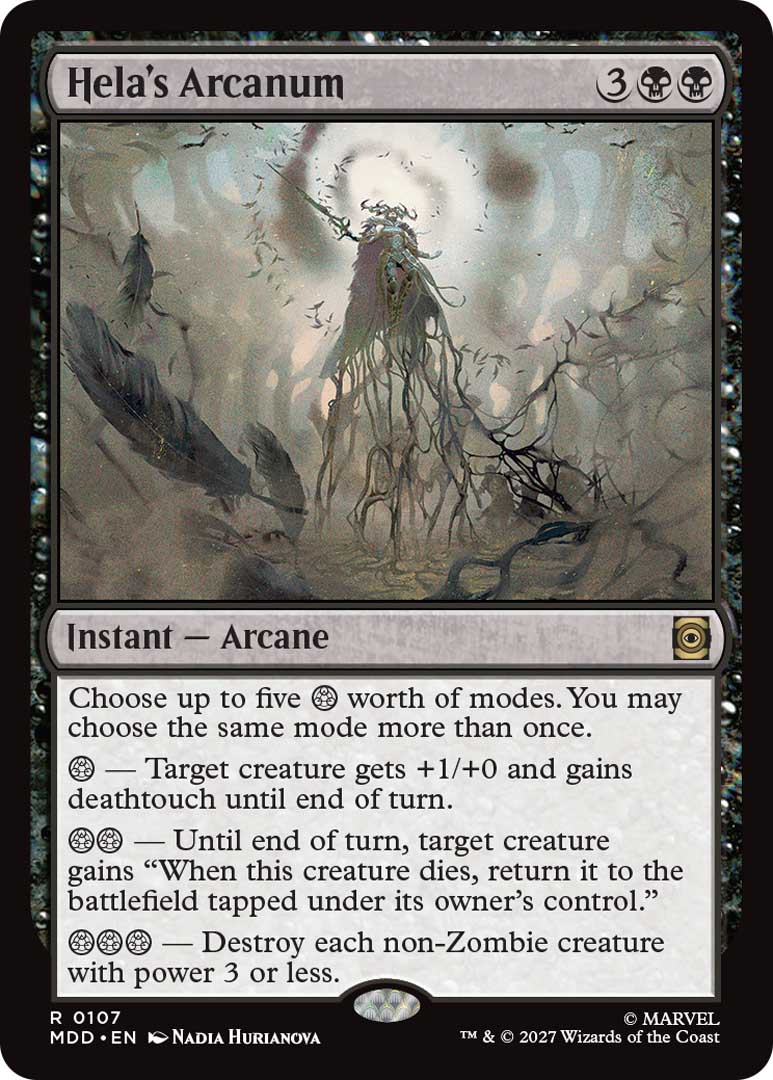
Even Arcane, a Magic subtype introduced decades ago, returns more prominently after being teased earlier in Marvel Super Heroes. Darkhold Destiny expands on it across colors and rarities, reinforcing how thoroughly the Marvel setting overlaps with traditional Magic design space.
That overlap is perhaps the strongest argument for the entire set.
At times, the team said, concepts emerged that felt simultaneously “100% Marvel and 100% Magic.”
That is exactly where Universes Beyond works best.
Dimensions Become Part of the Game
Darkhold Destiny’s nearly 30-dimensional narrative also has mechanical implications.
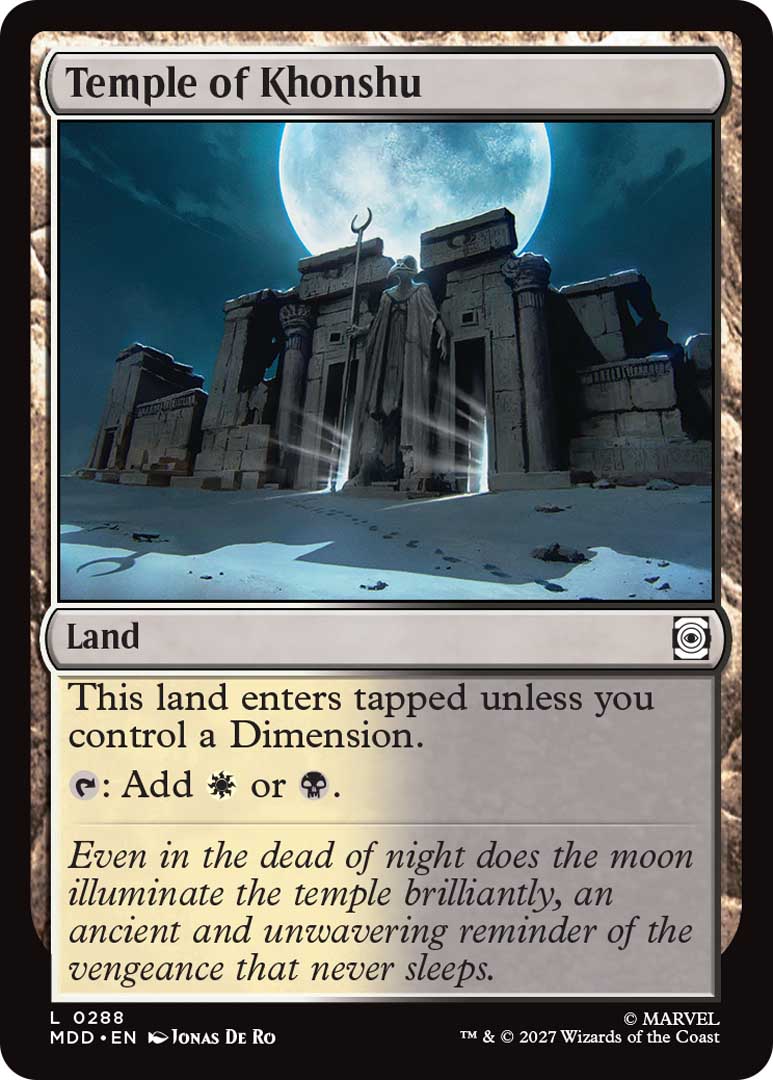
Wizards teased a new concept called Dimensions, although the team stopped short of explaining exactly how it works. Rosewater did reveal that it tested extremely well internally.
The set’s basic lands provide another window into those worlds.
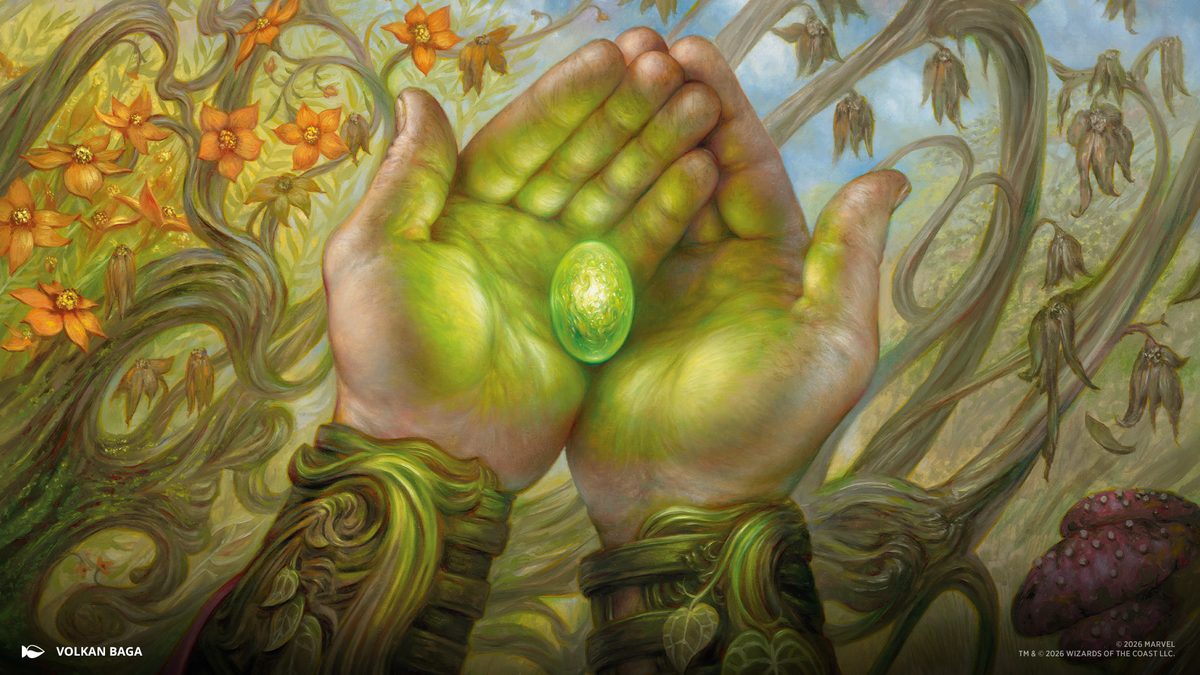
Instead of simply functioning as backgrounds, the lands are being used to show places before and after the villains’ invasion. Asgard can be seen in its original glory and then again after Hela’s conquest. The Dream Dimension changes under Nightmare’s influence. Svartalfheim, Limbo and Avalon offer additional opportunities to explore Marvel locations through Magic’s world-building language.
Those images allow the invasion to feel larger than any individual battle.
The story is happening to entire worlds.
Four Commander Decks Explore Different Corners of the Story
Darkhold Destiny will also launch with four Commander decks, each emphasizing a different side of its supernatural conflict.
Strange Academy uses white, blue and black and focuses on Doctor Strange, spellcasters and magical abilities. Gods of Asgard uses red, green and white, emphasizing Thor, gods and warriors that continue growing in strength.
Midnight Suns moves into white and black territory with Blade, Moon Knight, vampires and mechanics centered on gaining and draining life.
The final deck, Lords of Hell, uses black and red and allows players to embrace Marvel’s villains. Hela and Dormammu lead a strategy built around demons, devils, zombies, Mindless Ones and sacrificing your own forces for greater value.
Scene Boxes will depict major battles from the new storyline, while bundles will contain mechanically unique cards connected directly to the narrative.
In other words, Wizards is not confining the original story to flavor text. It runs through the cards, products, artwork and accompanying comic.
A New Marvel Character Will Debut Through Magic
Perhaps the most surprising part of the collaboration is that Marvel has allowed Wizards to help expand the universe itself.
A brand-new Marvel character will make her debut through the Darkhold Destiny storyline, with her origin continuing in an accompanying Marvel comic written by Jackson Lanzing and Collin Kelly. Wizards’ Narrative team developed the story with Magic in mind before it was adapted into the comic, making this more than a licensed retelling of an existing Marvel adventure.
The first digital chapter arrives February 26, 2027, followed by the physical edition during Darkhold Destiny’s launch week on April 7.
That puts the collaboration in unusual territory. Magic is no longer simply borrowing characters from Marvel’s mythology. It is becoming one of the places where that mythology actually expands.
NYCC Also Brought More Marvel Magic Announcements
Darkhold Destiny was the biggest reveal, but Wizards used NYCC to expand its Marvel partnership in several additional directions.
The Secret Lair Countdown Kit: Marvel’s History of Heroes will collect 30 cards featuring more than 30 artists interpreting major moments from Marvel comic history, including the Fantastic Four receiving their powers, Iron Man’s beginnings with Ho Yinsen and Jean Grey’s transformation into Phoenix.
The limited release goes on sale November 2, 2026 at 9 a.m. PT for $199.99.
Wizards also offered a first look at Doomsdrop, a series of drops primarily centered on Doctor Doom while leaving room for other Marvel characters to appear.
And with Avengers: Doomsday, the partnership will move into theaters. Fans seeing the film during opening weekend in Infinity Vision at Regal Cinemas will receive an exclusive Doctor Doom Magic: The Gathering card while supplies last.
Darkhold Destiny May Be the Most Natural Marvel and Magic Crossover Yet
Universes Beyond has always faced the same creative challenge: bringing another franchise into Magic without making either half feel like it has lost its identity.
Darkhold Destiny may have found one of the easiest bridges yet.
Marvel already has gods, witches, spellbooks, demons, vampires, zombies, enchanted weapons, magical dimensions and enough supernatural mythology to fill several Magic sets. Wizards does not need to force those characters into fantasy.
They were already living there.
What makes Darkhold Destiny more ambitious is the decision to go beyond adaptation. Marvel and Wizards have created a new story, new alliances, new rivalries, redesigned versions of familiar characters and even a new addition to Marvel’s universe.
For Rosewater and the creative team, this is the chance to explore the side of Marvel that most naturally speaks Magic’s language.
The biggest superheroes already had their turn.
Now the monsters, witches, gods and sorcerers get to cast.

Editor-in-Chief | Owner
I’m a dedicated aficionado of all things movies, pop culture, and entertainment. With a passion for storytelling and a love for the silver screen, I’m constantly immersed in the world of cinema, exploring new releases, classics, and hidden gems alike. As a fervent advocate for the power of film to inspire, entertain, and provoke thought, I enjoy sharing my insights, reviews, and recommendations with fellow enthusiasts.