



Sixty years of Star Trek history are heading into Magic: The Gathering, and Wizards of the Coast is using the crossover to celebrate far more than the franchise’s most recognizable captains.
Magic: The Gathering | Star Trek launches worldwide on November 13, 2026, bringing together characters, starships, planets and defining moments from across six decades of television and film while translating the ideals of exploration, cooperation, conflict and discovery into Magic gameplay.
From The Original Series through The Next Generation, Deep Space Nine, Voyager, the Kelvin timeline, Strange New Worlds, Lower Decks and beyond, the set reaches across nearly every incarnation of Star Trek. That scope allows Wizards to build something that feels less like a tribute to one particular generation and more like a celebration of what Star Trek has represented for 60 years.
The result is a release filled with new mechanics, familiar Magic systems reimagined through Star Trek, actor-signed collectibles, Commander decks and card treatments drawing directly from the visual history of the franchise.
Star Trek’s Philosophy Becomes Part of the Gameplay
What makes this crossover particularly interesting is how directly Wizards has translated recognizable Star Trek concepts into the rules of the game.
One of the new keywords is Beam Me Up, inspired by the transporter technology that has been part of Star Trek since the beginning. Certain instant and sorcery spells can be cast again from the graveyard by returning one of your creatures to its owner’s hand and paying the listed cost.
The mechanic captures the idea of transporting a crew member out of a dangerous situation while giving Magic players a strategic way to reuse creatures and potentially trigger their abilities again.
It is the kind of marriage between theme and gameplay that makes a crossover work beyond simply putting a familiar character on a card.
Face a Dilemma tackles another fundamental part of Star Trek storytelling.
For generations, Starfleet captains have been confronted with choices involving ethics, diplomacy, survival and the consequences of interfering with another civilization. In Magic, a player faces a dilemma whenever they choose one or more modes from a modal spell or ability.
The concept is mechanically straightforward, but thematically it fits Star Trek almost perfectly. The franchise has always been as interested in the choice a captain makes as it is in what happens after that choice.
Federation Makes a Diverse Crew an Advantage
Perhaps the strongest translation of Star Trek philosophy into Magic is the new Federation ability.
The United Federation of Planets is built around different species contributing their knowledge, cultures and abilities toward a larger shared future. Magic reflects that by having Federation abilities care about the number of different creature types among the non-Borg creatures a player controls.
In practical terms, building a more varied crew can make Federation abilities stronger.
That means one of Star Trek’s foundational ideas is not confined to flavor text or artwork. Diversity becomes part of the gameplay strategy itself.
The Strange New Worlds ability applies a similar idea to exploration, rewarding players based on the number of differently named lands they control. Rather than remaining in familiar territory, players are encouraged to expand into new locations.
Star Trek has always been about what exists beyond the next horizon. Here, Magic gives players an actual gameplay incentive to go looking.
The Borg Can Literally Assimilate Your Opponent
Then there are the Borg.
Wizards introduced Assimilate, a new keyword action that translates one of the Collective’s defining abilities directly into the game.
When certain cards allow you to assimilate another card, it can come under your control with a +1/+1 counter and become a Borg artifact creature, losing its previous creature types in the process.
In other words, the Borg do exactly what Star Trek fans would expect them to do.
They take what belonged to someone else and add its biological and technological distinctiveness to the Collective.
It is difficult to imagine a more natural Star Trek mechanic.
The Ships Need a Crew Too
A Star Trek set would not be complete without the ships.
Spacecraft and the returning Station mechanic allow vessels to begin as artifacts before a crew helps bring many of them fully online as artifact creatures.
Players tap creatures to place charge counters onto their Spacecraft, eventually unlocking additional abilities and, in many cases, turning the ship into a creature capable of entering the fight itself.
The Enterprise-D, for example, becomes an artifact creature once enough charge counters have been accumulated.
That design creates another natural connection between Star Trek and Magic. An iconic vessel may be technologically extraordinary, but somebody still has to sit in the captain’s chair.
Klingons Want Battle and Picard Wants You to Seek Out More
Commander brings additional Star Trek mechanics into the mix.
Battlefront rewards players for attacking multiple opponents during the same turn, making it an obvious fit for Klingons and the multiplayer structure of Commander. The more opponents you challenge, the more certain abilities can reward you.
Seek Out, meanwhile, triggers when a player draws their second card during a turn. Jean-Luc Picard is among the characters that can benefit from the mechanic.
One encourages glorious battle.
The other rewards knowledge and preparation.
Both feel right at home in their respective corners of the Star Trek universe.
Signed Star Trek Cards Become the Ultimate Chase
The gameplay may be the foundation, but Wizards is also making a significant push toward collectors.
Among the biggest chase pieces are seven different Headliner cards physically signed by Star Trek actors.
Each card pairs an actor’s signature with a portrait-style depiction of their character, and there are fewer than 250 copies of each signed card. They are randomly inserted into Collector Boosters.
These are not printed facsimile signatures. The cards were physically signed before being placed into products.
That gives Star Trek collectors something considerably different from a standard premium card variant. Pulling one means owning an autographed piece tied directly to one of the performers who helped build the franchise’s 60-year history.
For collectors wanting to explore the revealed cards themselves, Wizards is also maintaining an official Magic: The Gathering | Star Trek Card Image Gallery as previews roll out.
LCARS Becomes a Magic Card Frame
The visual treatments dig just as deeply into Star Trek history.
There are 10 LCARS shock lands, combining one of Magic’s most recognizable land cycles with the Library Computer Access and Retrieval System seen throughout Starfleet.
The treatments use an interface-inspired frame while depicting planets from across the Star Trek universe. Non-foil and traditional foil versions can appear in Play and Collector Boosters, while surge foil versions are exclusive to Collector Boosters.
There are also additional LCARS-framed cards throughout the set.
It is one of the smartest aesthetic choices in the collection because LCARS already looks like something designed to organize information. Turning that interface into a trading card frame almost feels inevitable.
Klingon Cards Are Actually Written in Klingon
The designers did not stop with the Federation.
Klingon frame cards borrow the rugged visual language of the Klingon Empire, but a separate collectible treatment takes the idea considerably further.
Certain versions are printed using Klingon script.
Those cards appear only in Collector Boosters and remain in Klingon regardless of the language printed on the rest of the booster.
That is the kind of wonderfully specific choice a 60th anniversary set should make.
Magic Revisits 60 Years of Star Trek Art and History
For fans who want something more nostalgic, Classic Enterprise cards take inspiration from vintage Star Trek movie posters, pairing a painterly style with a specialized frame designed to evoke the era of The Original Series.
Stardates cards take another route. The 30 borderless cards reimagine recognizable Magic reprints through characters and moments from Star Trek history.
Magic veterans may recognize the mechanics immediately, but the artwork reframes those cards through Star Trek.
There are also full-art Holodeck basic lands, full-art Away Team lands and other treatments that let the aesthetic change depending on which part of Star Trek a player wants represented in their deck.
Famous Star Trek Moments Stretch Across Multiple Cards
Wizards is also using borderless Scene Cards to recreate larger moments from different generations of Star Trek.
Among the featured scenes is the confrontation between Data and Locutus from The Next Generation, the legendary Mirror, Mirror story from The Original Series, a Voyager battle involving Janeway, Seven of Nine and the Borg Collective, and a large Deep Space Nine scene gathering familiar characters including Sisko, Odo, Quark and Jadzia.
When placed together, the cards form larger pieces of artwork.
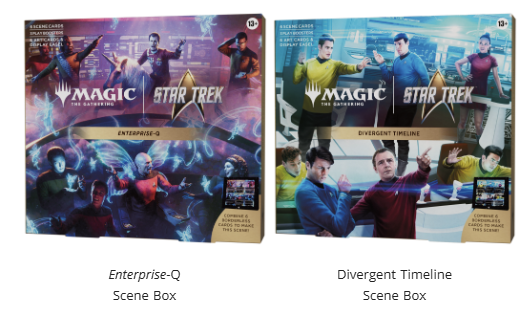
Two dedicated Scene Box products take the idea further.
The Enterprise-Q Scene Box depicts Q creating chaos aboard the Enterprise, while Divergent Timeline brings together familiar characters from another version of the Enterprise crew.
Each Scene Box includes six traditional foil borderless scene cards, six art cards and a display easel.
Four Commander Decks Represent Very Different Star Trek Philosophies
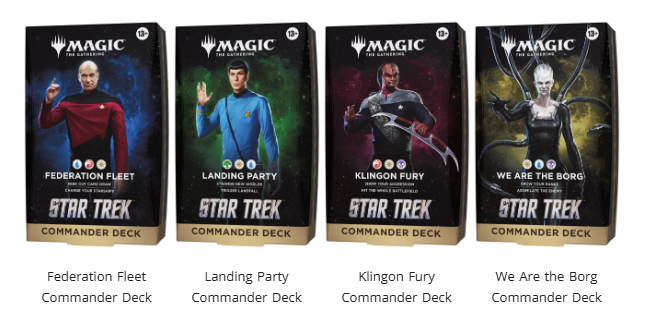
Commander players will have four distinct decks to choose from.
Federation Fleet puts Jean-Luc Picard at the center of a strategy built around strengthening your crew and operating powerful starships.
Landing Party is led by Spock and leans heavily into exploration and the discovery of strange new worlds.
Klingon Fury turns to Worf, encouraging players to attack multiple opponents and embrace Klingon enthusiasm for battle.
Then there is We Are the Borg, placing players in control of the Borg Queen and an expanding Collective capable of assimilating opposing forces.
The four themes give the crossover room to represent radically different philosophies within the same franchise instead of treating Star Trek as one uniform group of characters.
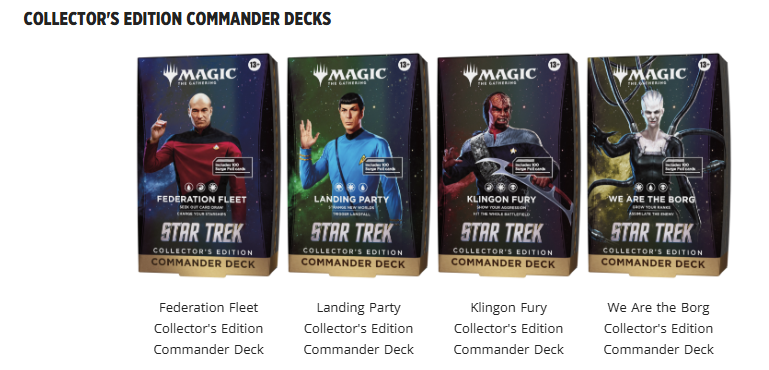
Collector’s Edition versions of those Commander decks will also be available with surge foil cards throughout each deck.
The Beam Me Up Bundle Puts Starfleet Schematics on the Ships
One of the standout products for collectors is the Beam Me Up Bundle.
It contains eight Play Boosters, one Collector Booster and two of eight traditional foil Beam Me Up promotional cards, along with lands and additional accessories.
The promo cards feature Spacecraft presented as Starfleet-style technical schematics, ranging from Federation ships to considerably less friendly vessels.
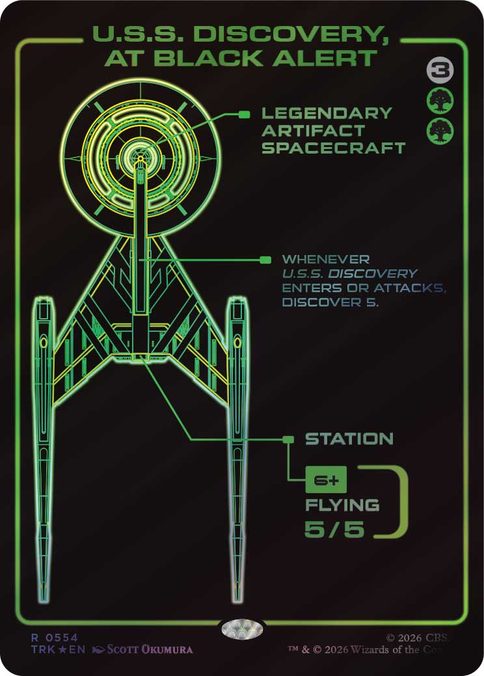
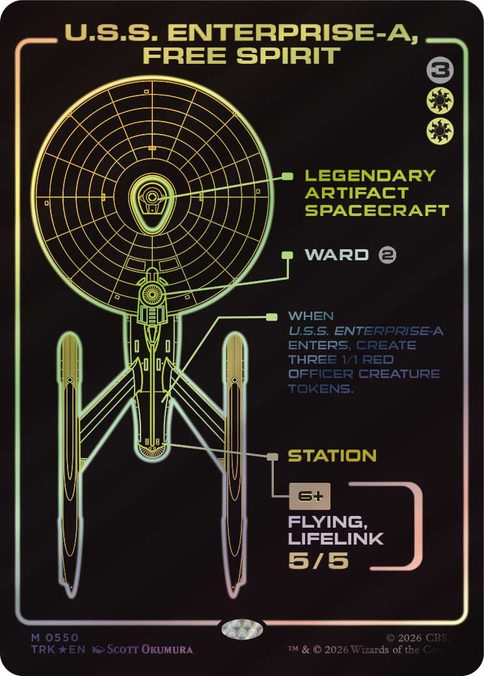
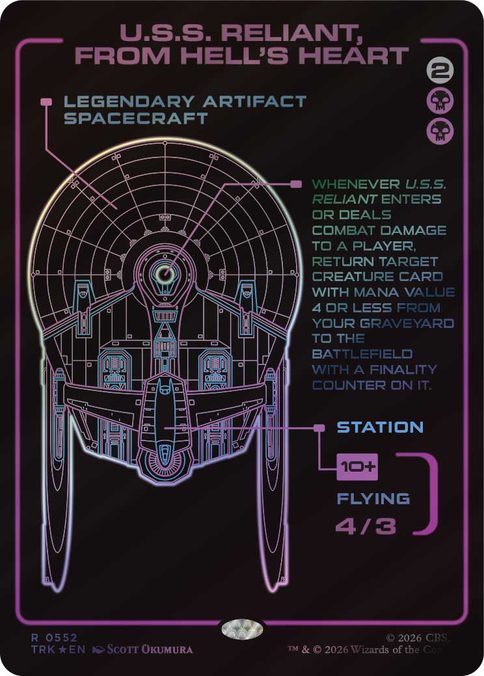
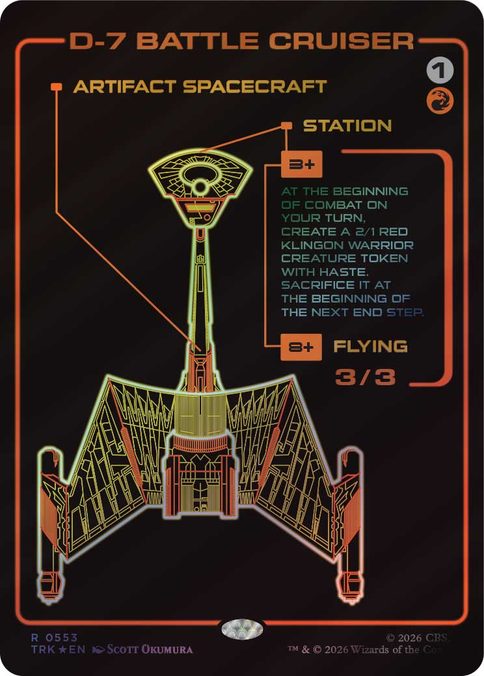
It is another example of the set drawing from the actual design language of Star Trek rather than simply placing franchise artwork into a traditional Magic frame.
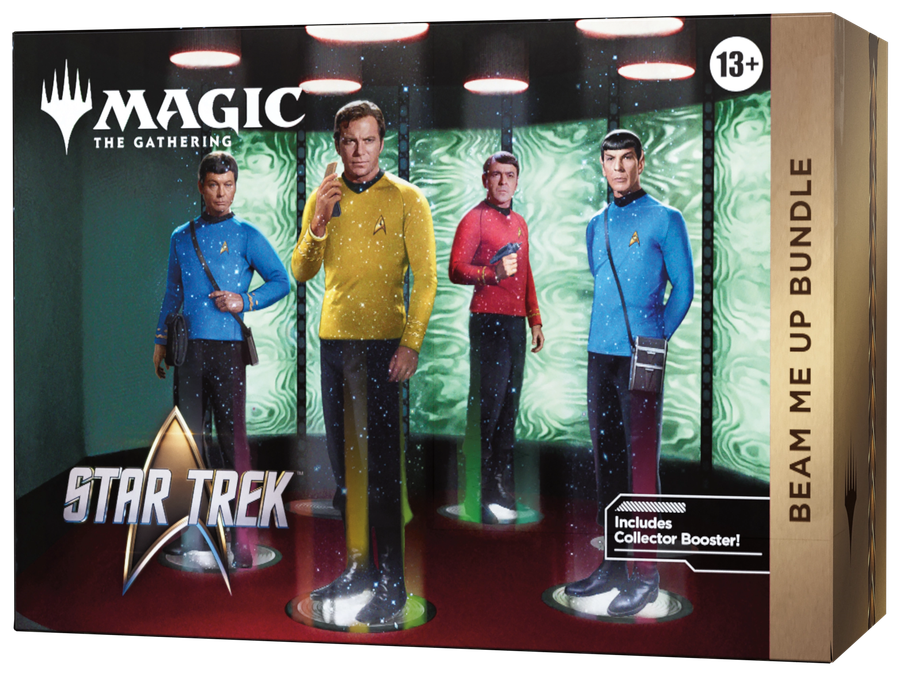
The broader lineup includes Play Boosters, Collector Boosters, standard Bundles, Commander decks, Collector’s Edition Commander decks, Draft Night products, Scene Boxes, Prerelease Packs and Welcome Decks.
That gives longtime Magic players, Commander groups, new players and Star Trek collectors several different entry points depending on what they actually want from the collaboration.
A Star Trek Set Built Around Discovery
Magic: The Gathering has visited plenty of recognizable worlds through Universes Beyond, but Star Trek gives the game something particularly compatible with Magic’s existing structure.
There are strange worlds to discover, civilizations to bring together, enormous ships to command, enemies to confront and impossible decisions to make along the way.
Instead of simply placing familiar Star Trek faces onto cards, Wizards has tried to translate the philosophy and language of the franchise into how the game actually works.
The Federation becomes stronger through diversity. The Borg assimilate. Klingons want battle. Starfleet explores. Transporters rescue personnel. Captains face dilemmas. Ships depend on their crews.
That is where this crossover becomes more interesting than a collection of recognizable artwork.
It actually feels like Star Trek.
And for a franchise celebrating 60 years of boldly going where no one has gone before, bringing that journey into Magic feels like another frontier worth exploring.
Magic: The Gathering | Star Trek releases worldwide November 13, 2026. Prerelease events run November 6 through November 12.
Preorders are available now through your local game store, TCGplayer, Amazon and other retailers where Magic is sold.

Editor-in-Chief | Owner
I’m a dedicated aficionado of all things movies, pop culture, and entertainment. With a passion for storytelling and a love for the silver screen, I’m constantly immersed in the world of cinema, exploring new releases, classics, and hidden gems alike. As a fervent advocate for the power of film to inspire, entertain, and provoke thought, I enjoy sharing my insights, reviews, and recommendations with fellow enthusiasts.