


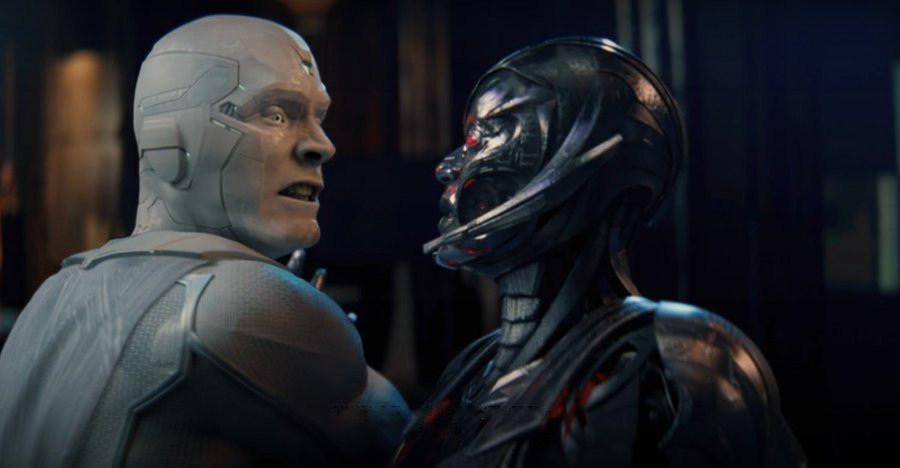
For all the artificial intelligence, android bodies and questions about consciousness running through Marvel’s VisionQuest, one of the series’ most compelling ideas is surprisingly human: everyone wants somewhere they can finally feel at home.
For longtime Marvel Comics readers, Jocasta carries considerably more history than her live-action debut might suggest. Introduced in Avengers #162 in 1977, the android was created by Ultron to become his bride, with her consciousness modeled using the brain patterns of Janet van Dyne, the Wasp. Jocasta ultimately rebelled against her creator and became an Avenger herself, developing an identity far beyond the purpose Ultron originally designed for her.
That history makes T’Nia Miller’s arrival in VisionQuest particularly significant. She is the first performer to bring Jocasta into live action, giving an MCU face, voice and physical language to a character who has existed in Marvel Comics for nearly five decades.
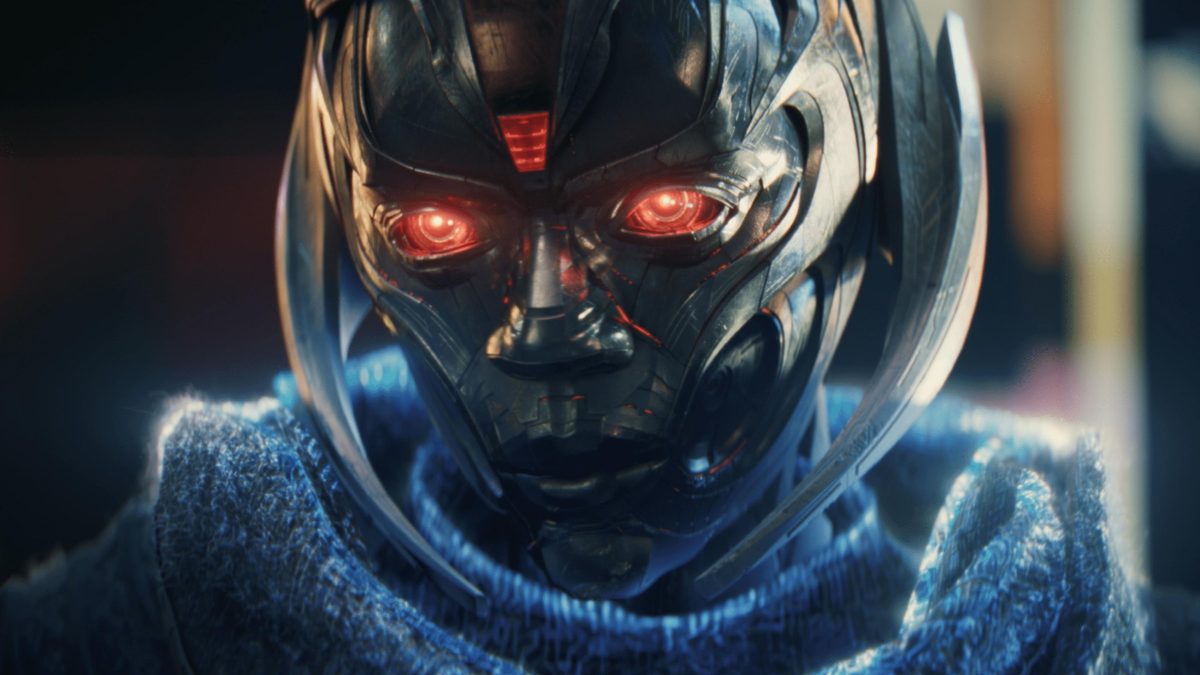
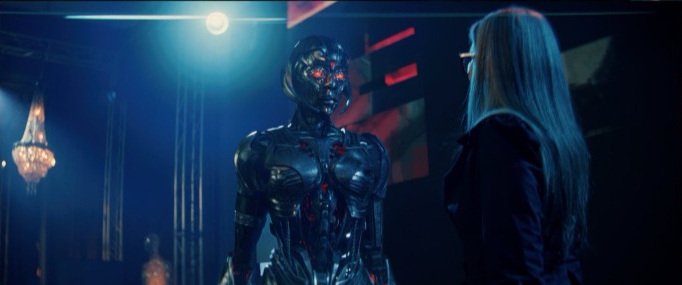
That idea sits at the heart of T’Nia Miller’s performance as Josephine, whose connection to Jocasta brings that long-awaited Marvel character into the MCU. Miller approaches the role with the precise physicality expected from an artificial being, but the performance becomes much more interesting whenever something recognizably human begins breaking through the machinery.
Speaking about VisionQuest, Miller laughed when recalling her first reaction to actually seeing the finished character on screen. Reading the scripts and understanding what was being created was one thing. Watching everything come together was another.
“I was celebrating,” she said.
Finding the Person Inside the Machine
Creating Jocasta’s physical language was a collaborative process between Miller and her stunt double. Rather than reducing the character to conventional stiff “robot” movements, Miller began thinking about intention.
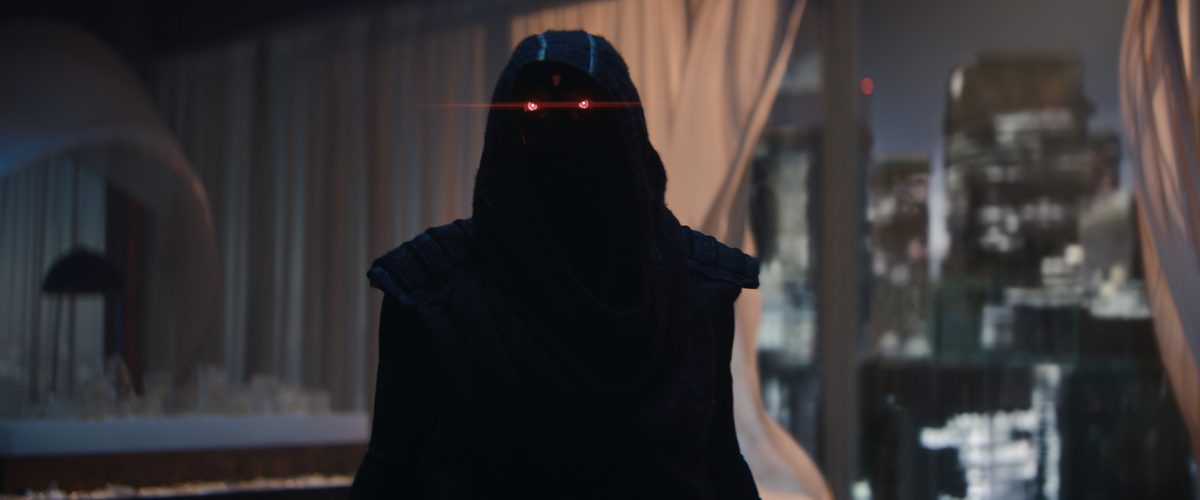
If Jocasta wanted to look at something, her head could move first and the rest of her body would follow. That simple concept gave Miller a foundation for movements that were mechanical without becoming distracting.
But she also wanted something underneath all that metal.
Miller incorporated subtle sounds and humming into the performance because she wanted audiences to recognize something familiar within Jocasta, even before completely understanding her.
“Forget the shell, forget the physicality of the metal. They can recognize a human in there.”
That distinction becomes increasingly important in a series populated by artificial intelligences trying to comprehend experiences humans often take for granted.
Vision himself is searching for meaning after escaping those who sought to weaponize him. The AI personas embedded within his programming include F.R.I.D.A.Y., E.D.I.T.H., J.A.R.V.I.S. and Ultron, while Thomas Shepherd introduces another mystery tied directly to the family Vision once believed he had lost.
Jocasta fits naturally into that larger question: when something artificial begins developing wants, fears, attachments and a need for belonging, where does the machine end and the person begin?
Miller did not need to erase the robotic qualities to explore that. She needed viewers to sense the person underneath them.
VisionQuest Is Really Searching for Home
One of the most resonant themes Miller identified in the series is family, although her interpretation stretches far beyond blood relationships.
For a show filled with beings whose ideas of parenthood, identity and even existence can be complicated, VisionQuest treats family as something that can be found rather than simply inherited.
“Family’s not necessarily those who are actually related to us,” Miller explained. “Family is found in many different ways.”
That can mean another person. It can mean a community. It can even mean a place.
“We are all in search of that place called home.”
Miller’s description of what home ultimately represents was even simpler: somewhere you can breathe and feel safe.
That theme gives the series an emotional foundation beneath its larger MCU machinery. Vision’s journey may involve artificial intelligence, Ultron and people hunting him, but the questions surrounding those ideas are recognizable. Who makes you feel safe? Where do you belong? What makes someone family? What happens when the thing you are searching for is something you have never fully experienced?
Jocasta is another way into those questions.
James Spader Turned “Rhinestone Cowboy” Into One of Miller’s Favorite Days
Thankfully, existential questions about artificial intelligence did not prevent the cast from having some fun.
Miller singled out one particularly unexpected sequence involving “Rhinestone Cowboy” as one of her favorite scenes in the entire series.
She knew the song would factor into the scene. What she was less prepared for was James Spader arriving with considerably more enthusiasm for the moment.
“I would love to see the outtakes of that,” Miller said, remembering how difficult it became for her and Paul Bettany to keep it together.
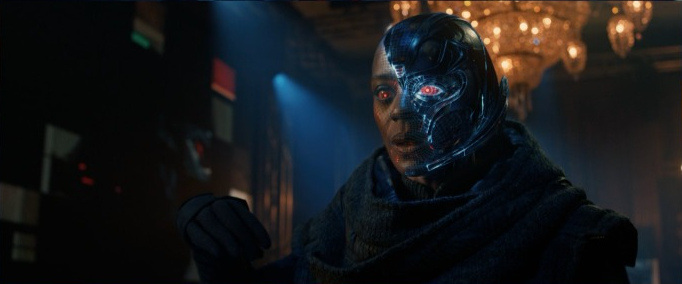
The sequence was scripted, but Miller credited Spader with bringing an extra layer to it once cameras started rolling.
“James comes with this whole routine,” she recalled.
The result was one of those moments where the peculiar tone of VisionQuest works in its favor. The series can deal with identity, loneliness and the consequences of artificial life before finding room for dancing, laughter and the kind of strange character interaction that would feel completely out of place in a more conventional superhero production.
“Honestly, that was one of the best days on set,” Miller said. “It’s such a brilliant, funny, pivotal scene.”
Becoming Marvel’s First Jocasta
There is another part of the experience Miller had not completely considered until our conversation: once you originate a Marvel character in live action, that connection tends to follow you.
Jocasta has existed in Marvel Comics since 1977, evolving from an android created by Ultron into a hero with deep ties to the Avengers. After nearly five decades on the page, Miller now becomes the first performer to establish what Jocasta looks, sounds and moves like in live action.
When confronted with the idea that fans could now associate her with Jocasta through future conventions, cosplay, potential appearances and whatever else Marvel’s enormous fandom brings, Miller initially needed a second to process it.
“I mean, I have now!” she laughed.
Then the significance began to settle in.
“I’m the first person to play her, and she’s been expected for a long time.”
Marvel’s universe can always change. Characters are reinterpreted, timelines shift and nobody can predict where a role might travel next. But being first does not change.
“It will always be attached to it, and that’s it. One hundred percent. That’s an honour.”
It is a meaningful milestone for an actor whose credits already include Years and Years, The Haunting of Bly Manor, Foundation, The Fall of the House of Usher, Doctor Who, The Peripheral and Sex Education. Jocasta adds something different: a character whose history extends long before this performance and whose future could stretch well beyond it.
Nobody Walked Onto VisionQuest Assuming They Had Made Something Great
There is confidence in the finished series, but Miller pushed back against the idea that the cast somehow knew throughout production that they were creating something audiences would embrace.
Actors can recognize strong writing. They can appreciate another performer across from them. They can know when a take feels good. None of that guarantees how the finished work will come together.
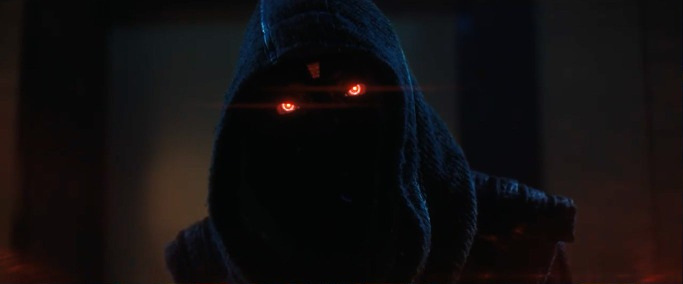
Miller recalled watching Spader work and thinking of his performance as a “masterclass,” only to see the accomplished actor still question whether a particular take had worked.
“He turns to me and says, ‘Was that alright? Was that okay?’”
Her reaction was essentially disbelief.
That uncertainty, she said, existed alongside a humility throughout the production. Whether it was Spader, Bettany, creator and showrunner Terry Matalas, the writers or the larger creative team, everyone was trying to push the work as far as possible rather than assuming success was inevitable.
“Everybody just wants to do their best,” Miller said.
The scripts, however, gave her an early reason to believe.
“I did say to Terry, ‘It’s bloody good.’”
Her description of what Matalas and the team ultimately created may also be one of the simplest ways to explain why VisionQuest works for her.
“It’s the best of the Avengers and WandaVision, in my opinion.”
Jocasta’s Humanity May Be Her Most Important Feature
It would have been easy for Jocasta to become another impressive piece of technology inside a story already overflowing with artificial intelligence.
Miller found something more interesting.
Her performance starts with mechanical precision, but the physicality is never the destination. The hums, the laughter, the awkwardness, the dancing and the longing underneath it all gradually point toward something much more recognizable.
For a series asking artificial beings to understand family, identity and what it means to have a home, that humanity matters.
Jocasta may arrive in the MCU surrounded by metal, programming and decades of comic book expectations, but Miller’s approach asks viewers to look beyond the shell.
There is somebody in there searching for a place to breathe, too.
VisionQuest is now streaming on Disney+, following its October 13 premiere.

Editor-in-Chief | Owner
I’m a dedicated aficionado of all things movies, pop culture, and entertainment. With a passion for storytelling and a love for the silver screen, I’m constantly immersed in the world of cinema, exploring new releases, classics, and hidden gems alike. As a fervent advocate for the power of film to inspire, entertain, and provoke thought, I enjoy sharing my insights, reviews, and recommendations with fellow enthusiasts.