






James Cameron has never been subtle, and Avatar: Fire and Ash does not pretend otherwise. Picking up directly from The Way of Water, the third chapter in Cameron’s Pandora saga plunges audiences back into a world still reeling from loss, still fighting for survival, and now facing its most ideologically dangerous threat yet. This is not just a sequel about escalation. It is a film about grief, identity, and what happens when belief itself becomes a weapon, and Cameron makes that clear early, loudly, and beautifully.

From the jump, Avatar: Fire and Ash opens with the kind of momentum most franchises save for the finale. Cameron delivers action in the first hour that would play like a closing act in nearly any other blockbuster, and then continues to build from there. Pandora is photographed and imagined on an absurdly grand scale, and the film constantly finds new ways to make familiar terrain feel brand new. Water remains a major element, but the film’s real evolution comes from how it blends environments and perspectives. Sequences that shift between underwater, surface-level chaos, and above-water vistas feel like the director actively challenging himself to top what came before.
Pandora, Pushed Past the Breaking Point

Visually, this is still the standard-bearer for big-screen spectacle. The colors, the dimensional depth, the environmental detail, the sense of scale, it all keeps escalating. There are multiple moments where you can feel the audience recalibrating to what they are seeing because the film keeps refusing to plateau. The river sequences are top-tier, and some of the half-submerged, half-skyline staging is the kind of visual problem-solving that makes Cameron feel like he’s directing with a ruler and a dare.
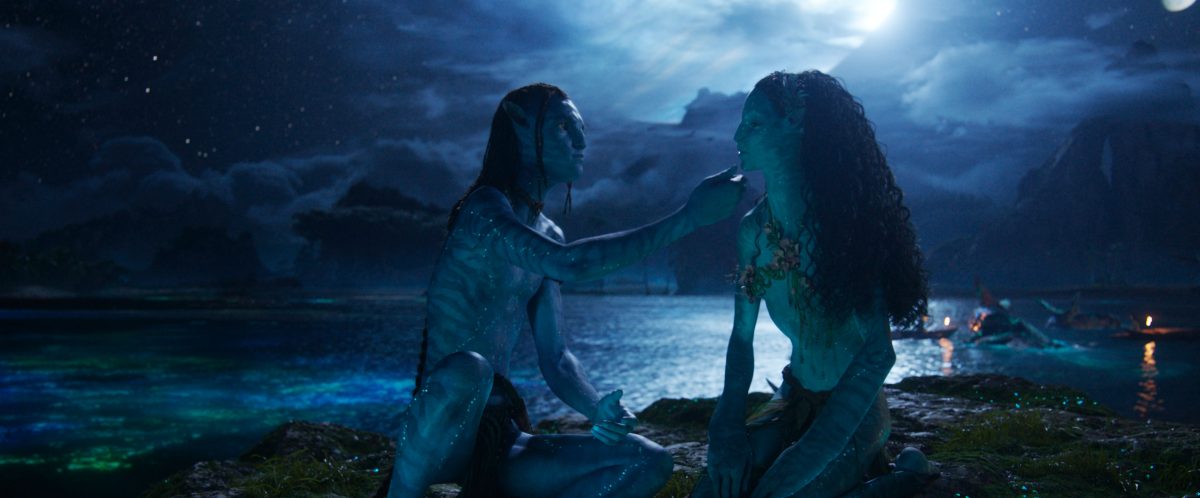
The third act is the payoff blockbuster filmmaking dreams of. A dust-and-dirt showdown staged against a sunset backdrop becomes a franchise-level highlight, with weaponry, brutality, and choreography all clicking into place. It plays like a culmination of everything Cameron does best: spatial clarity, escalating tension, and action built around character rather than noise.
Grief as the Story’s Engine

Where Fire and Ash separates itself is how committed it is to emotional weight. Neteyam’s death is not treated like a plot checkpoint. The film sits in the aftermath, and that choice gives the story maturity and staying power. Jake and Neytiri are still protecting their family, but they’re also trying to keep it from collapsing under the pressure of loss. Even the quieter moments carry tension because you can sense how close everyone is to breaking.
This is also where the film’s themes of identity and being seen land hardest. The story keeps circling back to the idea that who you are is not decided by fear, stereotypes, or what others project onto you. The film’s message about prejudice and division is clear, but it’s delivered through character emotion and consequence, not speeches.
Zoe Saldaña’s Motion Capture Masterclass
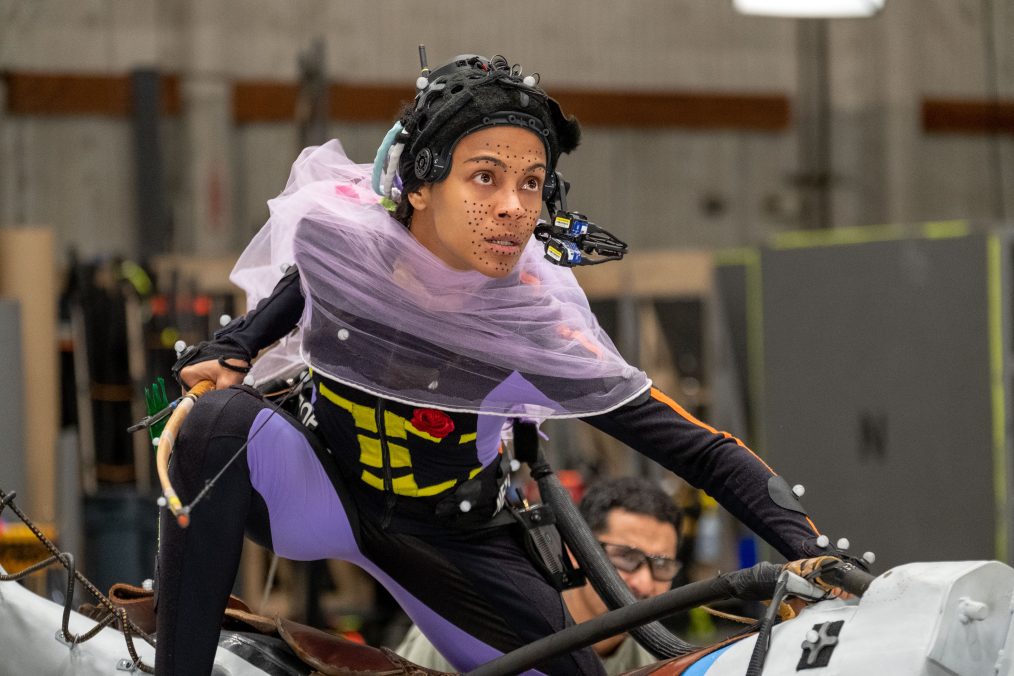
Zoe Saldaña delivers what may be the single best motion-capture performance of the year. As Neytiri, she moves through grief, rage, tenderness, and grit with a precision that feels almost too intimate for a film this massive. It is not just the raw emotion that hits. It is the control in the mannerisms, the facial work, the posture, the shifts in energy when she is trying to hold it together versus when she stops trying. She takes the audience across a full spectrum of emotion, and it never feels manufactured.
Sam Worthington continues to deepen Jake in ways that feel earned. The family dynamic remains the heart of the film, and the children’s evolving sense of place within that family gives the story an emotional momentum that is as compelling as the action.
Varang, Quaritch, and Villains Who Actually Entertain

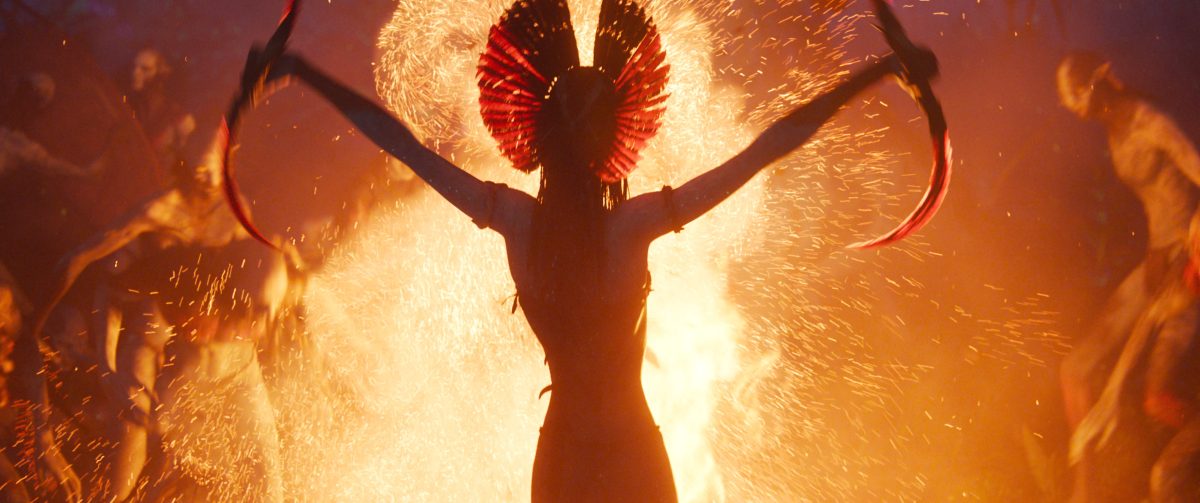
Oona Chaplin’s Varang is instantly iconic. She is seductive, intimidating, and mesmerizing in motion, and she brings a presence that makes the Mangkwan clan feel like a genuine cultural threat, not just another enemy faction. Varang’s belief system is part of the danger. She represents a Pandora that has rejected Eywa, and the film uses her to explore how power, religion, and ideology can be weaponized.
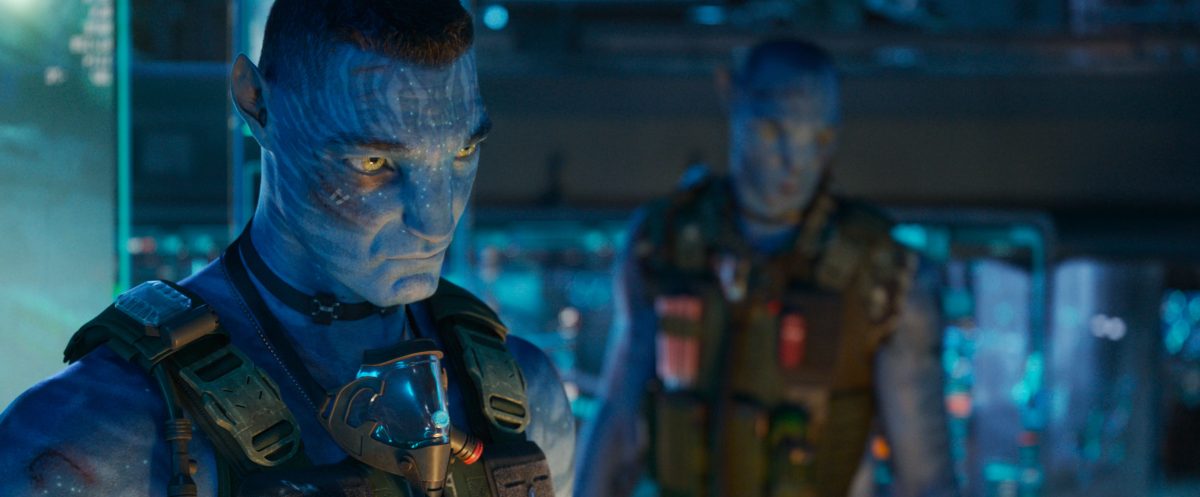
Stephen Lang continues to level up as Quaritch, and his scenes crackle with energy. The banter and friction between Quaritch and Edie Falco’s General Ardmore bring a sharp, entertaining edge to the film’s conflict, and it’s impressive how much personality these villains have without tipping into camp. They are fun to watch, which makes them even more dangerous.
IMAX 3D, High Frame Rate, and a Sound Mix That Hits
If there is a movie built for premium formats, it’s Avatar: Fire and Ash. The 3D is not just dimensional, it’s active. Objects and movement have depth that keeps you locked in, especially during action beats where the staging is constantly shifting. Cameron’s use of high frame rate is purposeful, enhancing clarity in motion-heavy sequences rather than calling attention to itself.

The sound design is equally essential. The film rumbles, the score swells, and yet the dialogue never feels drowned out by the orchestra of chaos. The sound mix is sharp, controlled, and immersive, making the biggest moments feel physical without becoming muddy.
The Takeaway

Avatar: Fire and Ash is the most emotionally intense film in the franchise so far, and it might also be the most complete. It is an overwhelming visual experience, but it never forgets the human story inside the spectacle. It’s funny in the right places, brutal when it needs to be, and surprisingly mature in the way it handles grief and identity. Cameron does what he always does: he builds a world so vivid you forget it’s constructed, then uses that world to make you feel something real.

Editor-in-Chief | Owner
I’m a dedicated aficionado of all things movies, pop culture, and entertainment. With a passion for storytelling and a love for the silver screen, I’m constantly immersed in the world of cinema, exploring new releases, classics, and hidden gems alike. As a fervent advocate for the power of film to inspire, entertain, and provoke thought, I enjoy sharing my insights, reviews, and recommendations with fellow enthusiasts.