


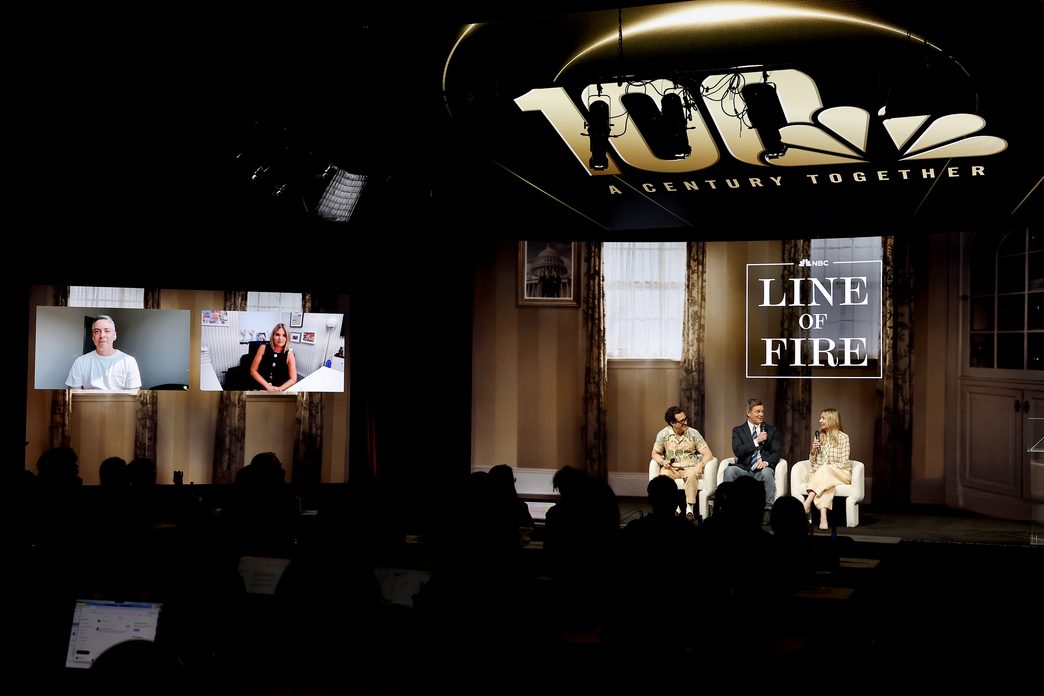
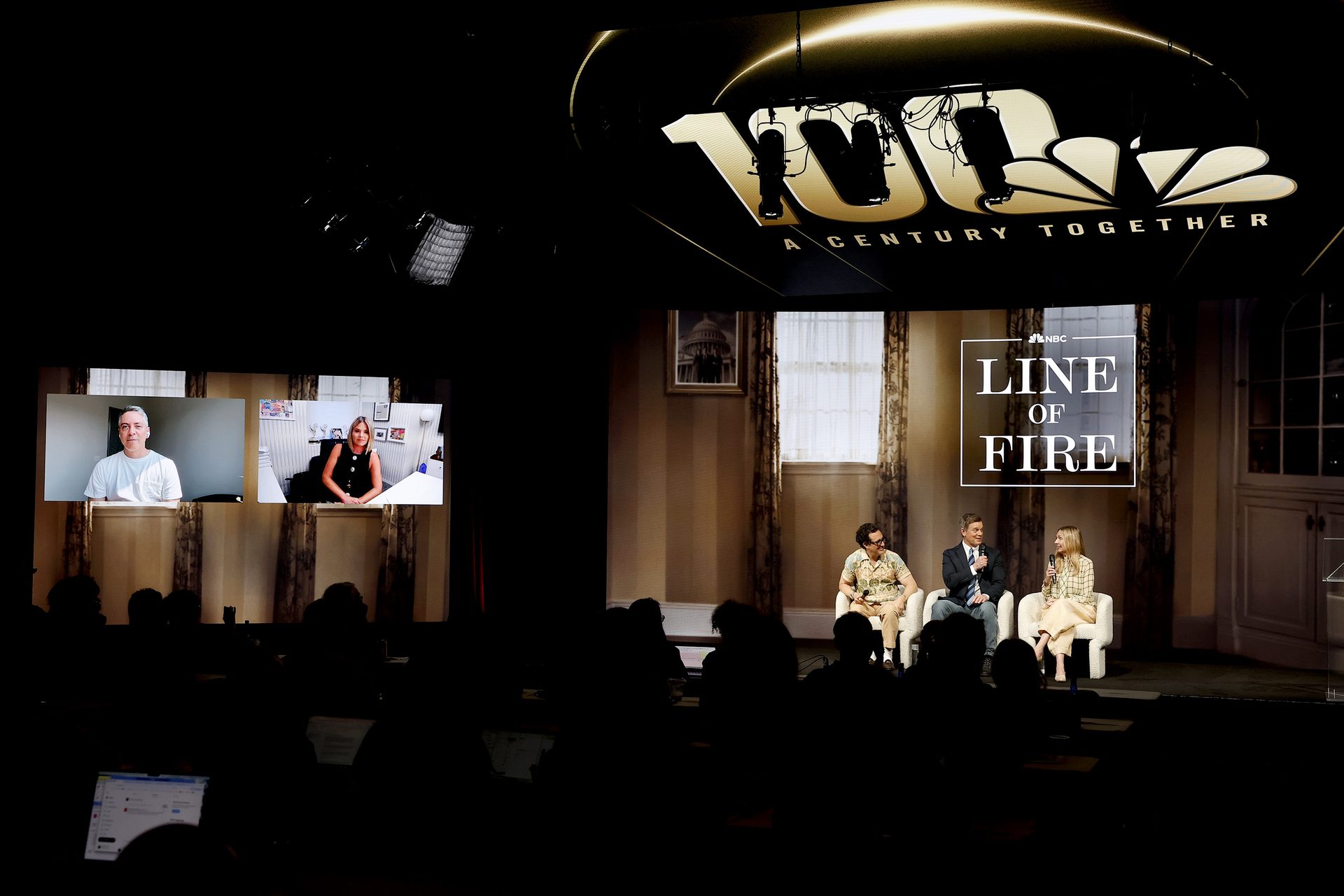


Line of Fire Wants to Know What Happens After the Case Closes
Every procedural has the same blind spot. The case wraps, the cuffs go on, everybody goes home happy. Except home is exactly the part these shows never show you. That’s the gap creator Josh Safran built Line of Fire to fill: a family where basically everyone works in federal law enforcement, and the show cares more about what that does to them at the dinner table than who they arrested that week.
“This show is primarily that,” Safran said, “but it really does look at how we all have to work together to solve anything.” He traced it back to a very specific irritation with the genre he loves. “I always love Law and Order, where their hands finally touch after 600 episodes and you’re like, they’ve been dating. That’s a wild thing that blows your mind. And I was always like, well, what happens? The case is over. Then what?”
The retirement trope, but they asked the actor about it anyway
Pete’s character is two days from retirement when the pilot kicks off, which anyone who’s watched a cop show knows is basically a countdown to disaster. A journalist asked if playing that story made him think about his own eventual exit.
“No,” he said, flatly. “I like having a job. I like having a place to go and a thing to do. I’m not ready to retire just yet.” He went further, saying what actually keeps him coming back to TV isn’t just the story, it’s the relationships you build doing it. “I like the ongoing story, but I also like the ongoing work relationships that you get to have.” He and his co-lead Jenna talked over each other answering that one, which they both admitted happens constantly. “We do,” Jenna said. “When we’re both talking, we do.”
Not a political show, even though everyone in it works for the government
Safran was upfront that the West Wing and The Diplomat came up a lot while breaking the show. Not as a format to copy, but as a proof of concept. “This idea of talking around the world of politics but not being a show about politics,” he said. “These people who do this job, do this job regardless of what state the country is in, or who is in charge. It’s about the love of the job. It’s about the love of the work.”
Jenna picked up the thread and made it more personal. She’d previously played a First Lady, and drew on what she saw around the real people who protect a family like that. “I had Secret Service men who would leave their family to protect mine. And so the dynamics of that are very much part of the DNA of what Josh has written.” Pete’s line for how the show sums itself up in one sentence: “How do you protect the world and the people you love at the same time?”
Later, when a reporter asked directly whether the show would touch current politics, Safran drew a clean line. “It’s 2026, but it is not related to the current political world. You can’t ever tie it to real time. It talks about issues that we’ve faced forever, that are ongoing and will continue to be ongoing. But it’s not political. It’s a human story, not a political story.”

They hired a real Secret Service agent so nobody could call it fake
Authenticity came up again and again, mostly because Jenna pushed for it. “This was with Josh’s encouragement,” she said, “but we brought on a former Secret Service man that I admire and adore as a consultant, to work with Josh and the writers, so that there’s real authenticity to it. We’ve all seen shows about our industries where you’re like, wait. I love The Morning Show, but they would never have a party in the studio, the union alone.” On top of the Secret Service consultant, there’s an FBI consultant and a US Marshal consultant on the writing side, and their Secret Service advisor shows up on set for anything procedural. “We did a drill and he was present and let us know exactly how to do what we were doing.”
Pete added that he’s not entirely new to this. “I had done weapons training on an NBC series years ago, where I went through a three-day weapons camp, so I do know how to do that.” No helicopter rappelling yet, he clarified, glancing at Safran. “Not yet. Not yet.”
Casting the parents first, then building the kids around them
The show’s family includes three younger actors, Tommy O’Brien, Taylor Bloom, and Kat Cunning, playing the kids. Safran said the process started with the parents. “We first cast Hope and Pete together as the matriarch and patriarch, and then putting together the rest of the family was the fun of it, finding actors who felt like they belonged with these two. And they do.” He credited a specific casting director for making it click, someone he’s worked with across every show he’s made.
Pete said the Jenna-shaped part of that decision sold him before he even signed on. “When I heard Pete was cast, I was absolutely sure I wanted to do it,” Jenna said (the two of them kept finishing this story for each other). “I’ve always loved watching Pete’s work. And I also heard, which is very important, that he’s a lovely individual, because we’re together twelve, fourteen hours a day.”
As for the kids, Jenna says they’re a handful in the best way. “Just last week, Hope was in her dressing room trying to learn her lines, and she came out in the hallway and I just heard, could you all just keep it down, I’m trying to learn my lines. When your mother’s a federal marshal, apparently that doesn’t automatically work on you.”
Case of the week, but with a conspiracy running underneath
On format, Safran confirmed it’s a hybrid, not a full swing toward serialized prestige drama. “Definitely a mix of the two,” he said. “I’m drawn to a throwback nature. All the shows that I marathon are the type of show I hope this is, which is you can watch an episode and feel like you saw a story, a beginning, middle, and end, but there’s still stuff that will drive you to the next episode. I’d say 80/20, sometimes 90/10.” He name-checked The Good Wife specifically: case closes, but the emotional residue sticks with the characters into the next episode. Underneath all of it, there’s a slower-burn conspiracy thread that doesn’t fully reveal itself until the end of the pilot.
Every episode pairs up a different combination of family members on a case, which Safran says was the whole point of stacking the cast with multiple agencies in the first place. FBI, Secret Service, US Marshals, each with their own jurisdiction and rulebook, which he admitted creates a real headache in the writers’ room. “It’s sometimes a little bit of a quagmire the writers have to work through with me. But I love that this is a show about a family where you never go home with these people on other shows. That was the initial genesis of the show.”
The reference points he kept returning to for tone weren’t procedurals at all. “Before Pete was even cast, when somebody asked me about the show, I said it reminded me of Six Feet Under. Not in all the ways, but in how it’s about a family and how their business affects their dynamics.” He also brought up This Is Us, and the pilot’s centerpiece: a fifteen-minute dinner scene where the family crosses in and out of frame mid-conversation, half of them on the phone working two cases at once. “It really captures something that makes the show unique.”
So: a procedural that isn’t really about the procedures, a retiring cop who insists he’s not thinking about retiring, and a showrunner who apparently workshopped the whole concept at his kid’s second birthday party across the street from his lead actress’s sister. If the dinner scene is even half as chaotic as they’re describing, I’m just hoping somebody in that family occasionally gets to eat.
WHEN TO WATCH
“Line of Fire” premieres Sunday, September 21 at 10pm ET/PT on NBC, streaming the next day on Peacock. Thirteen episodes from Universal Television.
Mark it on the calendar. This is the family drama that just happens to also be a shootout.