



Sound has always been one of horror’s most reliable weapons.
A melody can warn you that something is coming before anything appears on screen. Silence can make an empty room feel dangerous. A single distorted note can turn something familiar into something deeply uncomfortable.
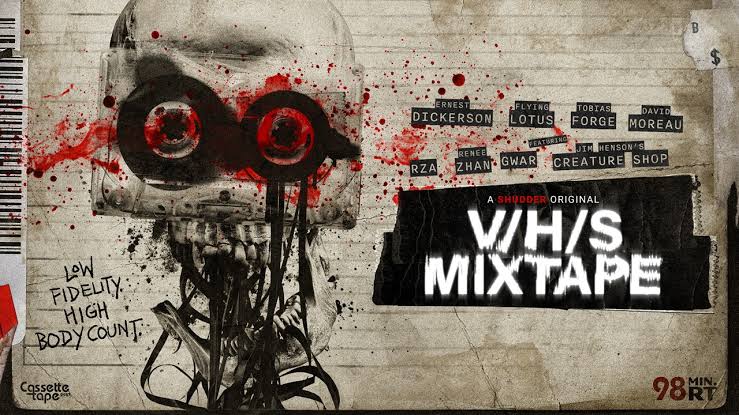
V/H/S/MIXTAPE takes that relationship and makes it the entire point.
The ninth main installment in the long running V/H/S franchise builds its latest collection of found footage nightmares around music, rhythm and sound, bringing together filmmakers Renee Zhan, David Moreau, Ernest Dickerson and RZA, with additional music video work from Flying Lotus and Tobias Forge and a gloriously chaotic wraparound featuring GWAR.
Streaming exclusively on Shudder, the 98 minute anthology is one of the franchise’s stranger creative swings. Some segments remain firmly rooted in traditional found footage, while others push toward music videos, performance art, puppetry and more experimental structures.
That makes the finished movie uneven at times, but also difficult to accuse of playing things safe.
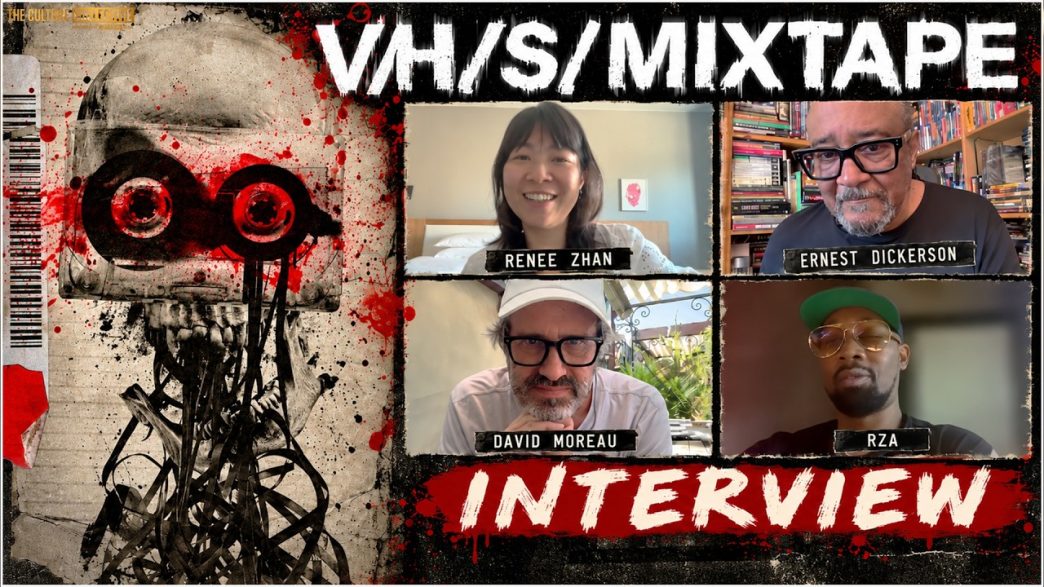
During a conversation with Zhan, Moreau, Dickerson and RZA, one thing became immediately clear: nobody approached the assignment from the same direction.
For Zhan, terror could hide inside something cheerful. Moreau became fascinated by what happens when almost every external sound disappears. RZA went looking for the darkness already living inside music. Dickerson treated sound as both protection and attack.
Together, those perspectives explain why V/H/S/MIXTAPE sounds as fractured, aggressive and unpredictable as it looks.
Renee Zhan Found Horror Inside Something Cheerful
Renee Zhan’s “Dance, Dance, Dance, Dance” begins with an almost aggressively cheerful idea.
A studio attempts to reboot a long cancelled puppet television show with a mysterious past. The segment features work from Jim Henson’s Creature Shop, immediately connecting the short to the colorful, tactile world of classic puppetry.
Then Zhan starts pulling that warmth apart.
Rather than making the music ominous from the beginning, she deliberately pushed it in the opposite direction.
“The greater that contrast, the more effective it would be.”
The music is bright and infectious, closer to something designed for a children’s television program than a horror movie. That positivity becomes part of the joke and eventually part of the discomfort as the puppets begin doing things the music absolutely does not prepare you for.
It is one of the anthology’s clearest examples of sound becoming frightening because of context rather than because the music itself sounds threatening.
Zhan wanted to lean into the joy as much as possible.
That choice also explains why the melody has such staying power. It is catchy enough to lodge itself in your head even after everything around it becomes increasingly grotesque.
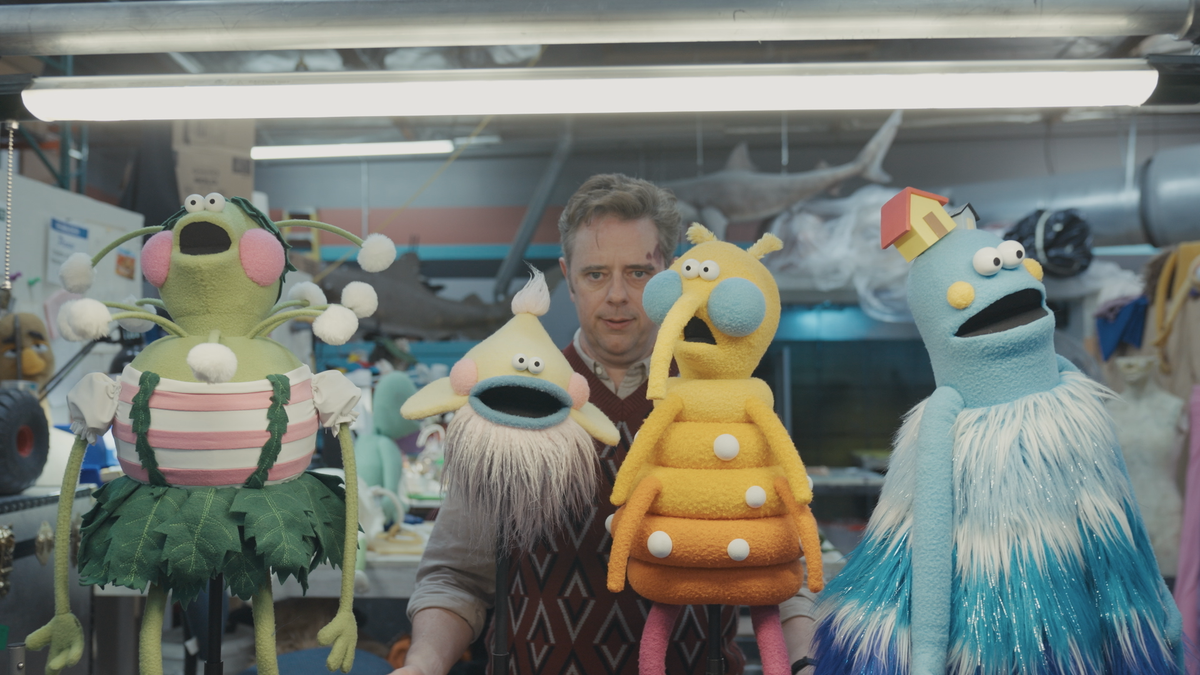
The collaboration with the Creature Shop gave Zhan another opportunity she clearly appreciated.
She explained that the production had extensive access to the actual space, with very little need to create an artificial environment around it. Some existing material had to be removed for intellectual property reasons, but otherwise, what audiences see is largely the Creature Shop itself.
The story grew out of that opportunity.
Executives want to resurrect an old puppet show in a modern, computer generated form.
The puppets are not pleased.
That simple premise allows the segment to turn something associated with childhood creativity into something vindictive and violent without losing the handmade charm that made the puppets interesting in the first place.
David Moreau Wanted Audiences to Hear Their Own Bodies
David Moreau’s “Heartbeat” takes almost the exact opposite approach.
The segment follows two urban exploration influencers trapped inside a decommissioned military facility once used for sonic experiments.
Moreau did not begin with loud music.
He began with silence.
Years earlier, he had experienced an anechoic chamber, a space designed to absorb sound reflections and create an environment approaching complete silence. The experience stayed with him because true silence does not mean hearing nothing.
It means hearing yourself.
Your breathing.
Your stomach.
The movement of blood.
The tiny sounds produced by a body that normally disappear beneath everything happening around us.
Moreau described lasting about 15 minutes before feeling as if the experience was driving him crazy.
That memory became the foundation for “Heartbeat.”
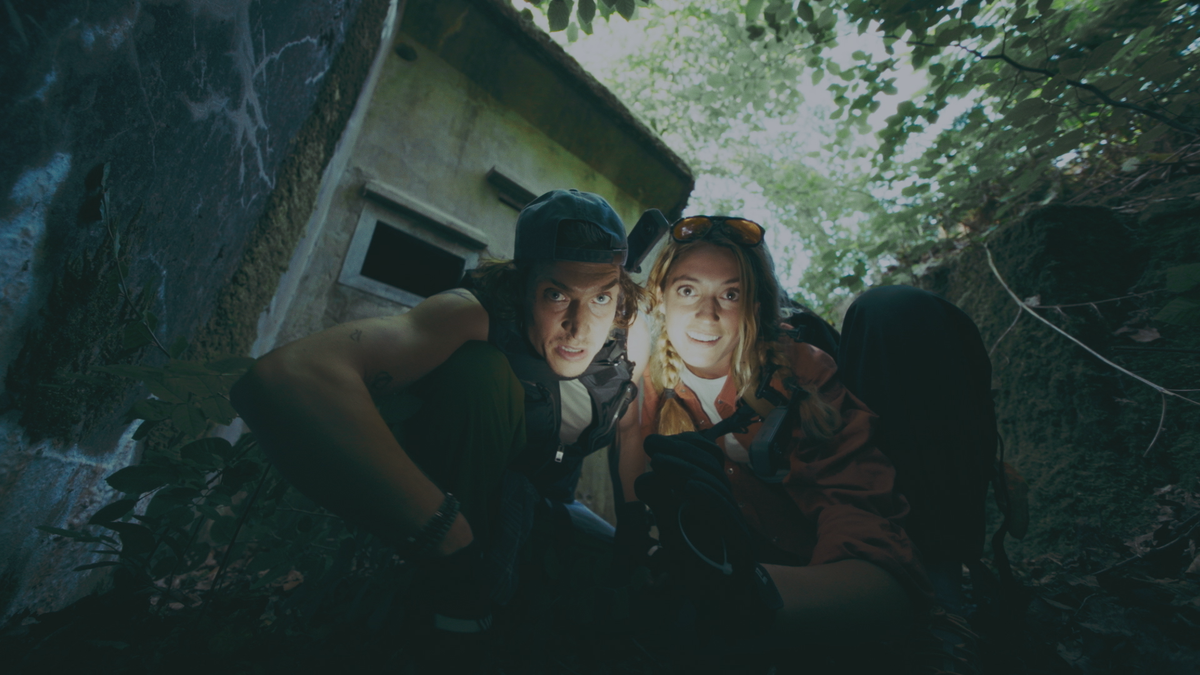
The concept is particularly effective because it turns the viewer’s own body into part of the horror.
Instead of asking what terrifying noise might be lurking somewhere inside a building, Moreau asks what happens when every ordinary distraction disappears and the only thing left to hear is yourself.
That is where V/H/S/MIXTAPE becomes more interesting than simply assembling shorts about cursed songs.
The broader subject is sound.
Sometimes the scariest version of sound is barely there at all.
RZA Went Straight Into the Darkness
Nobody needed to convince RZA that music could be frightening.
When the conversation turned toward music traditionally being associated with joy or comfort, he quickly pushed back.
There is dark music too.
For “Death Tone,” RZA wanted something more direct and visceral. The story follows a young sound engineer carrying out instructions left behind by her father to create the ultimate track.
RZA approached the segment with the intention of making something closer to a slasher than a mystical meditation on music.
But one of his biggest inspirations came from a movie that frightened him as a child: The Omen.
It was not simply what happened on screen that stayed with him.
It was the score.
“When you hear that music, you just felt this pressure in your heart, in your mind.”
That feeling became something he wanted to recreate.
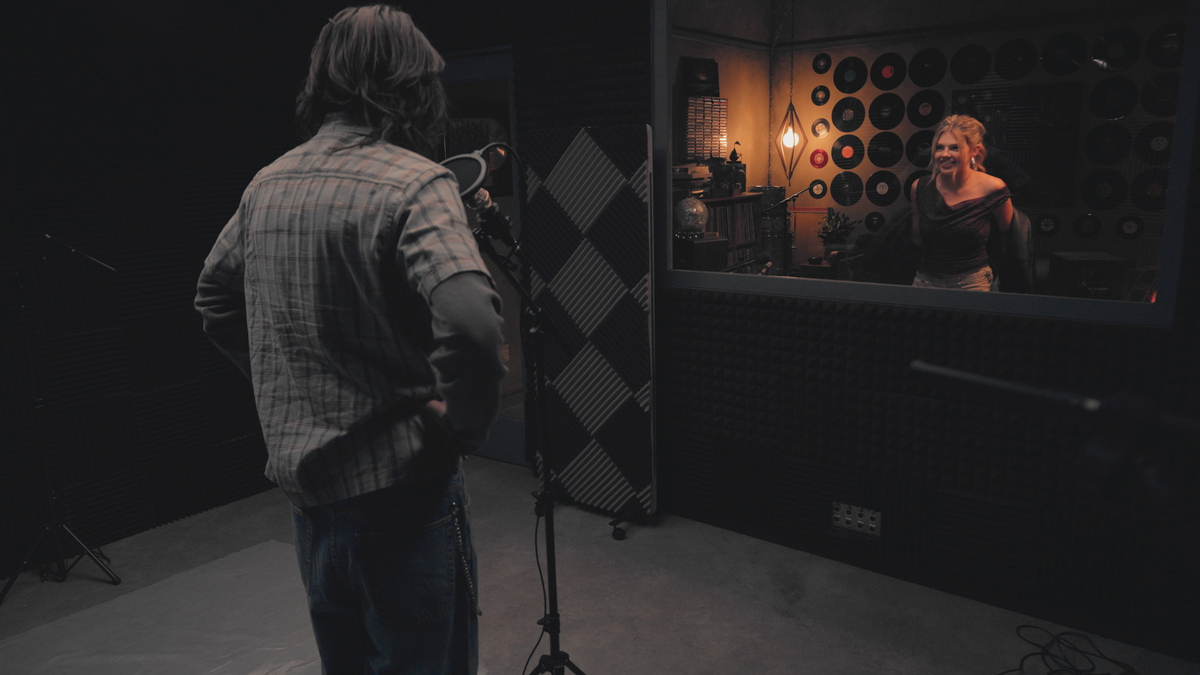
The concept also allows RZA to take a familiar idea from hip hop and make it brutally literal.
Artists often talk about putting their life into their music.
In “Death Tone,” that relationship between life, death and the finished track becomes much more dangerous.
The result is one of the anthology’s more interesting creative combinations because RZA does not abandon his musical instincts when stepping into horror. He uses them as the foundation.
Ernest Dickerson Turns Music Into a Weapon
Of all the segments, Ernest Dickerson’s “The Music of Mr. Sze” was the standout for me.
The story follows a college film student whose documentary project begins uncovering the life of a reclusive and tormented musician.
Dickerson gives the concept room to breathe.
Where much of V/H/S/MIXTAPE thrives on frantic shifts in style, his segment builds its tension more patiently. The music is not simply atmosphere. It becomes part of the conflict itself.
For Dickerson, cinema and music have always been closely connected.
He pointed toward films such as Psycho and The Omen as examples of how music can become inseparable from the story being told.
But his segment goes further.
“The idea in my story was music that is used as a weapon, as a protection against something.”
That creates a battle between two forms of sound, one originating from our world and something else answering back.
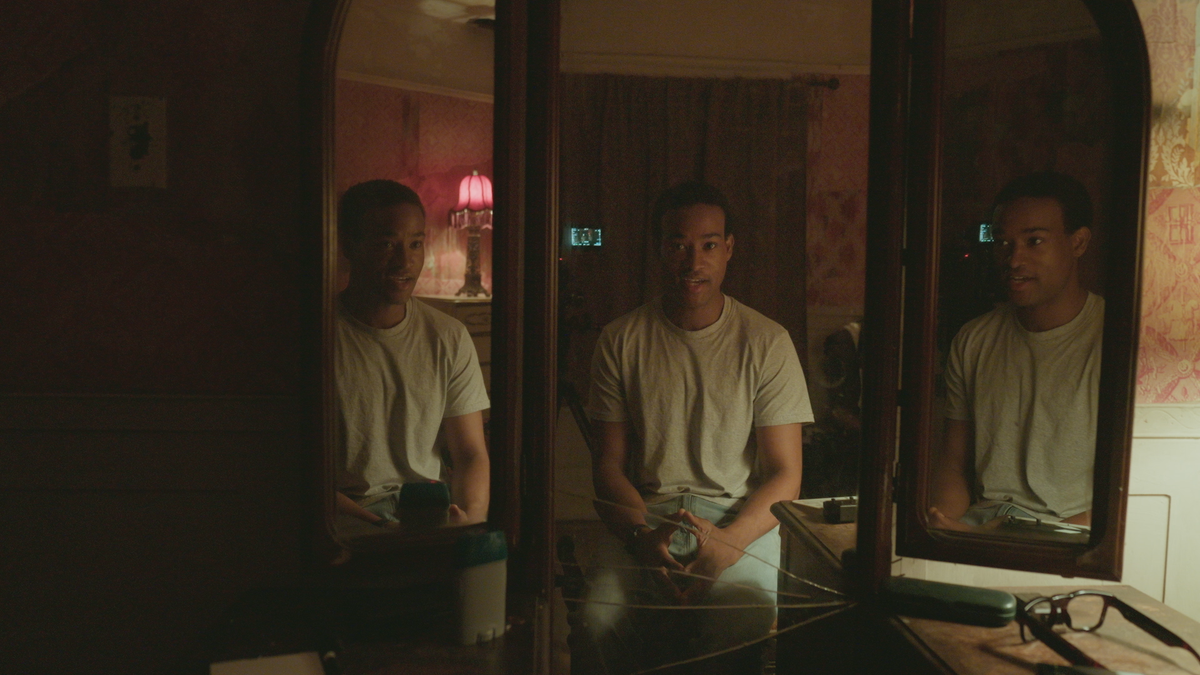
Dickerson described music as capable of doing much more than relaxing an audience.
It can excite.
It can agitate.
It can terrify.
That understanding is what gives his short such weight. Instead of adding music after the horror has already been created, the music itself becomes part of the dramatic machinery.
It is also where the movie’s central theme feels most complete.
Sound Mixing Becomes Part of the Performance
A movie this focused on audio only works if the people behind the sound are treated as creative partners.
Dickerson spoke about that relationship directly, comparing sound mixers to fellow musicians.
A filmmaker may create the individual pieces, but mixing determines how those sounds interact, where they sit and how aggressively the audience experiences them.
That collaboration also requires being open to ideas from other people.
“Every new job gives you new information. You’re always learning something new.”
That may sound like a simple observation, but it gets at why V/H/S/MIXTAPE works best when it treats sound as something more than technical polish.
This is not an anthology where the audio department arrives at the end to make the monsters louder.
Sound is the monster.
The Mixtape Is Messy, but the Experiment Is the Point
As a complete movie, V/H/S/MIXTAPE is not the most consistent entry in the franchise.
The anthology moves aggressively between traditional found footage, surreal imagery, music video structures, puppet carnage, psychological horror and GWAR doing exactly what anyone familiar with GWAR would expect them to do.
That creates some serious tonal whiplash.
There are moments when the decision to stretch the definition of found footage feels exciting, and others where the movie drifts far enough away from the franchise’s original visual language that longtime fans may wonder what still qualifies as a tape.
The GWAR wraparound is deliberately ridiculous. Some of the musical interludes feel more like experimental videos than horror shorts. The transition between those pieces and something as patient as Dickerson’s segment can be jarring.
But that messiness is also part of the identity.
A mixtape is not necessarily supposed to sound like one continuous song.
It is a collection of voices, styles and moods competing for space.
Seen that way, the instability almost makes sense.
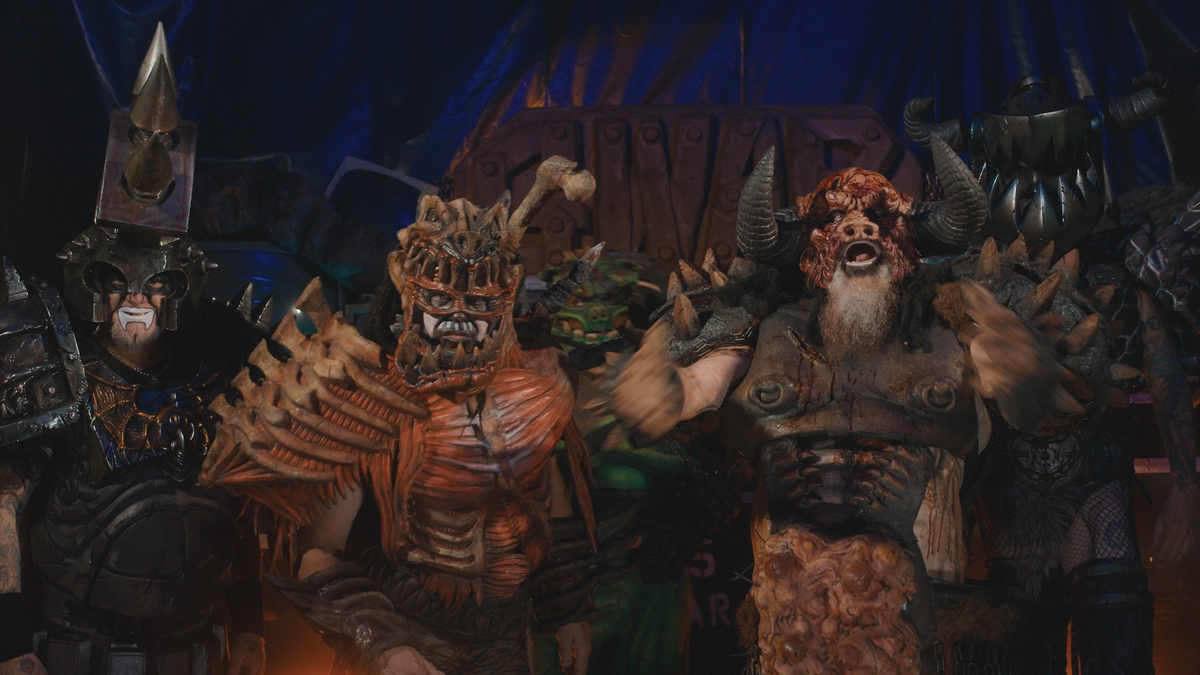
The strongest pieces are the ones that take the theme beyond simply placing music inside a horror story.
Moreau makes the human body audible.
Zhan makes happiness unsettling.
RZA finds the menace already hiding inside a soundtrack.
Dickerson makes sound fight back.
Even when the individual pieces do not fit neatly beside one another, the filmmakers are clearly interested in answering the same question from completely different directions.
How much can sound do to us before we even understand what we are hearing?
Whatever You Do, Don’t Turn Down the Volume
There is plenty of blood in V/H/S/MIXTAPE.
There are creatures, puppets, disturbing transformations and enough practical gore to keep the franchise faithful happy.
But this time, some of the most effective moments are not about what appears in front of the camera.
They are about what reaches you before the image does.
That makes headphones or a good sound system almost mandatory.
The movie can be frustratingly uneven, but it is also ambitious enough to justify the experiment. Dickerson and Moreau deliver the strongest atmosphere for me, while Zhan’s collaboration with Jim Henson’s Creature Shop gives the anthology one of its most memorable visual ideas. RZA brings another perspective entirely, treating music and horror as two languages that already understood each other long before he put them together.
Maybe that is the real success of V/H/S/MIXTAPE.
It reminds us that horror does not need to wait until something steps into frame.
Sometimes all it needs is the right sound.
V/H/S/MIXTAPE is streaming exclusively on Shudder.
Watch the full filmmaker interview on YouTube

Editor-in-Chief | Owner
I’m a dedicated aficionado of all things movies, pop culture, and entertainment. With a passion for storytelling and a love for the silver screen, I’m constantly immersed in the world of cinema, exploring new releases, classics, and hidden gems alike. As a fervent advocate for the power of film to inspire, entertain, and provoke thought, I enjoy sharing my insights, reviews, and recommendations with fellow enthusiasts.