





PRIMETIME is an uncomfortable film by design. It takes Chris Hansen, To Catch a Predator, mid-2000s network television, hidden-camera sting operations, ratings hunger, public humiliation, and the moral fog around televised justice, then shoots it with the anxiety of a horror movie. That is what makes the film so strange, tense, and hard to shake.
Directed by Lance Oppenheim in his narrative feature debut, PRIMETIME stars Robert Pattinson as Chris Hansen, the Dateline NBC journalist and host of To Catch a Predator. Set in 2006, the film follows Hansen as he sets out to make television history while the production around him turns undercover sting operations into primetime spectacle. Inspired by Luke Dittrich’s Esquire article “Tonight on Dateline, This Man Will Die,” the film is not a clean biopic or a simple rise-and-fall portrait. It is a psychological media thriller about performance, ego, power, ethics, and how easily morality can become entertainment.
That specificity matters. This is not just Pattinson playing a fictional media figure. This is Pattinson playing Chris Hansen, and the film is directly wrestling with the cultural legacy of To Catch a Predator. It asks what happens when a journalist becomes a star, when a public service becomes a ratings machine, and when the camera starts shaping reality instead of simply documenting it.
Chris Hansen as Horror Figure

The boldest thing PRIMETIME does is frame Chris Hansen like a horror presence. That does not mean the film excuses the predators being confronted. It means Oppenheim is clearly fascinated by the man holding the cards, the man controlling the room, the man stepping out from behind the curtain with camera crews, police, producers, and moral authority behind him.
You would expect a movie about To Catch a Predator to make the predators the center of the horror. Instead, PRIMETIME keeps turning the unease back toward Hansen, the production, and the television machine built around him. The low lighting, surveillance angles, control-room tension, and eerie framing make Hansen feel less like a straightforward journalist and more like someone being consumed by the role he created for himself.
That is what makes the movie fascinating and odd. At times, it is hard to tell what the film wants you to focus on most: Hansen’s obsession with the job, the ethics of the stings, the predators being exposed, the race for primetime ratings, or the production team turning danger into television. The answer is all of it, and that gives the film its uneasy charge.
Robert Pattinson Captures the Voice and Ego

Robert Pattinson gives a strong, committed performance as Chris Hansen. I do not think he ever completely disappears into the role. There were moments where I still saw Pattinson rather than fully seeing Hansen. But the performance works because Pattinson captures the sound, control, mannerisms, facial reactions, and public-facing calm that made Hansen such a recognizable television figure.
You hear Hansen in the cadence. You see him in the restrained expressions, the patient pauses, and the way Pattinson carries that strange mix of politeness and menace. Hansen’s public persona was always built on a calm confrontation: sit down, answer the question, explain yourself, and understand that the entire country might be watching. Pattinson understands that rhythm.
The film also gives him room to show the ego behind the image. This version of Hansen is not played as a noble crusader or a cartoon villain. He is ambitious, controlled, funny in uncomfortable ways, and increasingly addicted to the power of the format. Pattinson leans into the sleazy charisma without softening the character for the audience.
The To Catch a Predator Era Comes Back Ugly

One of the best parts of PRIMETIME is how deeply it understands the specific media moment it is dissecting. Before social platforms turned outrage into a constant public feed, network television had already learned how to package shame, fear, danger, and justice into ratings-friendly entertainment.
The nostalgia of that era is all over the movie, but it is not warm nostalgia. It is ugly, fluorescent, and anxious. The production design nails the mid-2000s feel: bulky monitors, grainy digital feeds, suburban sting houses, broadcast equipment, control rooms, and the strange confidence of network television when it still believed it could own the national conversation.
The color grading also does a lot of work. The film moves between dark, uneasy spaces and brighter television environments where everything feels artificial and exposed. Those shifts make the movie feel unstable in the right way. The world of PRIMETIME is built on cameras, but nothing in it feels truly transparent.
PRIMETIME turns To Catch a Predator into a media horror story, exposing how easily justice, humiliation, and ratings can become part of the same broadcast.
Lance Oppenheim Makes the Control Room Terrifying
Oppenheim’s documentary background gives the movie its edge. He knows how to watch people perform versions of themselves, and that skill is everywhere in PRIMETIME. The control rooms feel like war rooms. The sting houses feel haunted. The camera watches people watching other people until the entire act of observation becomes disturbing.
The live-sting sequences are the movie’s strongest material. The tension comes from the machinery: producers whispering into headsets, cameras waiting in hidden corners, decoys holding a performance together, police standing by, and Hansen preparing for his entrance. Everyone is playing a role, even the people who believe they are simply telling the truth.
That is what makes the film feel like horror. The fear is not just what might happen in the house. It is the realization that everyone involved is trapped in the logic of the show. Once the machine starts rolling, nobody wants to stop it because stopping it would mean admitting the machine has become the point.
A Strong Cast Around Pattinson

The supporting cast adds a lot, even when the movie does not always give everyone enough space. Merritt Wever is excellent as Andie Bender, Hansen’s producer, a figure who helps show how much of this world is built on calculation, pressure, and the constant need to make television that cannot be ignored. Her performance gives the film a sharp counterweight because she understands the production machine from the inside.
Skyler Gisondo brings anxious, uneasy energy as Dan Plumb, one of the decoys involved in the sting operations. Phoebe Bridgers is also compelling as Del Harvey, a young decoy whose presence adds another layer to the film’s strange mixture of performance, danger, and exploitation.
Bokeem Woodbine is amazing as Cortland Gunn, the Rockwall County chief of police. Every time he appears, he brings weight, intelligence, and authority to the film. I wanted more of him because his scenes suggest a larger world of law enforcement pressure, local politics, and moral compromise that the movie could have explored even deeper.
Where the Movie Gets Messy
The biggest issue is that the film’s focus can feel slippery. At times, it is hard to confidently say whether PRIMETIME is most interested in Chris Hansen, the predators, the victims, the decoys, the production crew, the legal fallout, or the moral economy of network television.
That uncertainty may be intentional, but it still makes the film feel slightly scattered in places. The movie is at its best when it is inside the control room or following Hansen as he becomes more consumed by the show’s power. It slows during the second-act legal and corporate conversations, even though those moments are necessary to show how NBC, law enforcement, liability, and ratings all collide.
The film also could have used a sharper victim perspective. That would have made the moral horror even stronger. The movie is already uncomfortable, but more time spent with the collateral damage of these operations would have made Hansen’s obsession and the network’s hunger feel even more devastating.
A Media Nightmare Worth Watching
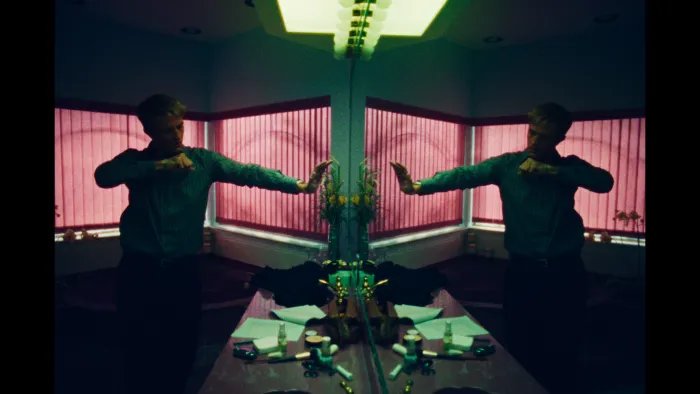
PRIMETIME is a tense, stylish, uncomfortable media thriller that turns Chris Hansen and To Catch a Predator into the center of a 2000s media horror story. It is not a traditional biopic, and it is not a simple takedown. It is stranger than that. It is about a man, a show, a network, and an audience all participating in a machine that turns morality into spectacle.
Robert Pattinson does not fully vanish into Chris Hansen, but he gives a strong, unsettling performance built on voice, ego, control, charm, and menace. Lance Oppenheim brings a documentarian’s eye to the mechanics of television production, making cameras, headsets, monitors, and surveillance feeds feel as threatening as anything happening inside the sting houses.
By the end, I felt like I had walked into something much closer to a horror film than expected. That is what makes PRIMETIME work. It is not scary because of what is hiding in the dark. It is scary because of what people are willing to do under bright studio lights.

Editor-in-Chief | Owner
I’m a dedicated aficionado of all things movies, pop culture, and entertainment. With a passion for storytelling and a love for the silver screen, I’m constantly immersed in the world of cinema, exploring new releases, classics, and hidden gems alike. As a fervent advocate for the power of film to inspire, entertain, and provoke thought, I enjoy sharing my insights, reviews, and recommendations with fellow enthusiasts.